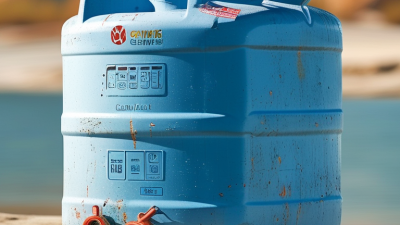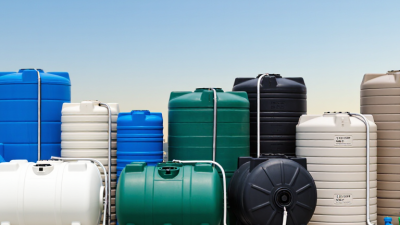
China Top 10 Plastic Water Tank Suppliers for NZ Buyers

Choosing reliable plastic water tanks nz suppliers requires more than comparing prices on a product page. New Zealand buyers must consider tank capacity, polyethylene quality, UV resistance, delivery distance, installation support, and after-sales service. A low-cost tank may become expensive when fittings fail or transport is poorly planned.

This guide examines China’s top 10 plastic water tank suppliers for New Zealand buyers. It focuses on manufacturers with practical production experience, documented quality procedures, export capability, and clear communication. Product ranges may include slimline tanks, underground tanks, rainwater storage tanks, chemical tanks, and agricultural models. Real buying decisions also depend on local conditions, including coastal exposure, strong sunlight, limited access roads, and changing water demand.

The review considers material safety, moulding consistency, wall thickness, connection design, warranty terms, and customisation options. It also highlights questions buyers should ask before placing an order. Can the supplier provide test records? Are replacement fittings available? Does the quoted price include secure packaging and realistic shipping terms?

No ranking is perfect.

Supplier information can change, and a polished catalogue cannot replace factory verification. Buyers should request current certificates, sample photos, inspection records, and references from comparable projects. This article is intended as a practical starting point, not a substitute for local engineering advice. With careful checks, New Zealand importers, farms, builders, and property owners can reduce avoidable risks and select storage tanks suited to their actual environment.
China Top 10 Plastic Water Tank Suppliers for NZ Buyers

How to Choose a Reliable Chinese Plastic Water Tank Supplier for New Zealand

Choosing a Chinese plastic water tank supplier for New Zealand requires more than comparing prices. Start with the tank’s intended use, volume, installation site, and water type. A rural household may need a UV-resistant tank for outdoor storage. A construction project may require different fittings and delivery planning. Ask for material declarations, production records, and test reports for potable-water contact. Verify whether documents match the exact tank model.

Visit the factory online or in person when possible. Inspect rotational moulding equipment, storage areas, and quality-control procedures. Ask how the supplier checks wall thickness, lid fit, inlet strength, and leakage. Request a sample or detailed production photographs. Small details matter. A poorly sealed lid can admit dust, insects, or rainwater. Confirm that fittings suit New Zealand pipe sizes and that replacement parts remain available.

Check export experience, packaging methods, lead times, warranty terms, and communication speed. The supplier should explain UV protection, cleaning access, anchoring, and transport limits clearly. Ask an independent New Zealand installer to review the design before payment. Local conditions can expose weaknesses that factory documents miss. No checklist is perfect. I would still inspect the tank on arrival, including surface marks, deformation, odour, and fitting damage. A low quote may hide weak packaging, unclear certification, or expensive after-sales delays. Choose evidence over confident promises.

China’s Top 10 Plastic Water Tank Suppliers for New Zealand Buyers

China’s top 10 plastic water tank suppliers for New Zealand buyers should be assessed by evidence, not attractive catalogues. Reliable manufacturers usually offer rotationally molded tanks, UV-stabilized polyethylene, reinforced lids, and clear wall-thickness data. Ask for production photos, material specifications, batch records, and independent test reports. Potable-water applications require especially careful documentation. Confirm that the proposed tank suits New Zealand conditions and intended use.

A practical supplier review should include factory capacity, mold quality, leak testing, export experience, and replacement-part support. Request a physical sample when possible. Check the tank’s diameter, height, inlet size, outlet position, and pallet requirements before ordering. Freight costs can change sharply when tank dimensions increase. A polished website is not proof of quality. My own checklist would also include response speed, because unclear answers may create costly delays later. One weakness remains: remote audits cannot reveal every production problem.

Tips: Compare at least three quotations with identical specifications. Ask how long outdoor color stability is tested. Confirm packaging for sea freight and inspect a pre-shipment sample. Keep written records of every agreed detail. Cheap pricing can be useful, but it may hide thinner walls, weaker fittings, or limited after-sales support. A careful buyer should allow time for independent inspection, even when the supplier appears experienced.

China Top 10 Plastic Water Tank Suppliers for New Zealand Buyers

Rank Supplier Profile Main Manufacturing Region Tank Construction Common Capacity Range Typical Product Types Material Commonly Specified Relevant Documentation for NZ Buyers Suitable New Zealand Applications Typical Production Lead Time Typical MOQ Buyer Verification Priority
1 Supplier Profile 01 Jiangsu, China One-piece rotational moulding 500–30,000 litres Vertical, horizontal and underground tanks UV-stabilised linear polyethylene Material datasheet, dimensional drawings, batch inspection report and packing list Farm water storage, rainwater collection and rural supply systems 15–25 working days 10–20 units, depending on size Confirm UV rating and wall-thickness consistency
2 Supplier Profile 02 Zhejiang, China Seamless rotational moulding 300–20,000 litres Potable-water, chemical-storage and process tanks Food-contact polyethylene when specified Food-contact declaration, test report, technical drawings and certificate of origin Residential potable water, light commercial and agricultural use 18–30 working days 5–15 units Request potable-water compliance evidence for the exact resin grade
3 Supplier Profile 03 Guangdong, China Rotomoulded single-piece tank with moulded fittings 1,000–50,000 litres Large above-ground and modular storage tanks High-density polyethylene with UV inhibitor Product specification, load information, installation guide and export packing records Commercial buildings, construction sites and emergency storage 20–35 working days 5–10 units Check lifting points, base support requirements and transport dimensions
4 Supplier Profile 04 Shandong, China Heavy-duty rotational moulding 500–30,000 litres Low-profile, slimline and rainwater tanks Linear low-density polyethylene or polyethylene blend Wall-thickness chart, UV-test information, inspection report and installation manual Urban rainwater harvesting and restricted-access installations 15–28 working days 10–25 units Verify tank dimensions against the available installation footprint
5 Supplier Profile 05 Fujian, China Seamless rotationally moulded construction 300–10,000 litres Domestic, marine and portable water tanks UV-resistant polyethylene suitable for outdoor exposure Material declaration, leak-test record, drawings and export carton or pallet details Homes, lifestyle blocks, boats and remote properties 12–25 working days 10–30 units Confirm baffle design and water movement control for mobile applications
6 Supplier Profile 06 Hebei, China Reinforced rotational moulding 1,000–40,000 litres Industrial, irrigation and fire-water storage tanks Industrial-grade polyethylene with reinforced base design Technical data sheet, structural information, welding or fitting details and inspection report Irrigation, industrial process water and non-potable storage 20–40 working days 5–10 units Confirm suitability for the stored liquid and local installation conditions
7 Supplier Profile 07 Anhui, China One-piece moulded tank with replaceable fittings 500–20,000 litres Vertical tanks, cone-bottom tanks and dosing tanks Polyethylene selected according to water or chemical compatibility Compatibility chart, fitting schedule, dimensional drawing and batch traceability record Water treatment, agricultural dosing and light industrial use 18–32 working days 5–20 units Review chemical compatibility and fitting material before ordering
8 Supplier Profile 08 Jiangxi, China Rotational moulding with custom tooling capability 200–15,000 litres Custom-size, slimline and private-label-ready tanks UV-stabilised polyethylene specified by application Prototype drawing, mould approval record, inspection checklist and commercial invoice Special site dimensions, replacement projects and low-volume imports 25–45 working days for new moulds 20–50 units; tooling may apply Confirm tooling ownership, mould charges and sample approval process
9 Supplier Profile 09 Hunan, China Heavy-wall seamless moulding 1,000–30,000 litres Underground, agricultural and remote-area tanks Impact-resistant polyethylene with external rib or support design Installation instructions, burial limitations, material report and pre-shipment inspection record Farm storage, underground collection and remote water systems 20–35 working days 5–15 units Obtain engineering guidance for burial depth, backfill and groundwater conditions
10 Supplier Profile 10 Chongqing, China Modular rotationally moulded tank system 500–25,000 litres Sectional, vertical and multi-tank storage systems Outdoor-grade polyethylene with UV protection Assembly manual, connection layout, spare-parts list and pre-shipment inspection report Remote projects, staged capacity expansion and commercial storage 20–35 working days 5–20 units Confirm connection sealing, overflow design and replacement-part availability

Note: The supplier profiles are presented without company or brand names. Capacity, lead-time and MOQ figures are typical sourcing ranges and should be confirmed against the supplier’s current quotation, technical drawings, test documents and New Zealand installation requirements.

Key Products, Materials, and Manufacturing Strengths of Each Supplier

China Top 10 Plastic Water Tank Suppliers for NZ Buyers

The shortlisted suppliers offer different products and manufacturing strengths. Supplier 1 focuses on rotationally moulded LLDPE tanks for farms. Supplier 2 produces slimline tanks for narrow residential spaces. Supplier 3 supplies large vertical tanks for commercial storage. Supplier 4 specialises in underground models with reinforced walls. Supplier 5 makes potable-water tanks using documented food-contact materials. Supplier 6 provides cone-bottom tanks for easier drainage. Supplier 7 develops modular tanks for restricted delivery sites. Supplier 8 combines tanks with pumps, valves, and level indicators. Supplier 9 supports custom colours, outlets, and fitting positions. Supplier 10 targets export orders with reinforced packaging and container planning. Product quality depends on wall thickness, mould control, UV protection, and consistent material blending.

Tips: Ask for material certificates, tank drawings, warranty terms, and recent production photos. Confirm whether fittings suit New Zealand pipe sizes. Also check delivery protection, installation guidance, and replacement-part availability. A strong supplier should explain testing methods clearly, not only display attractive catalogue images. Request samples when practical. Small details matter.

In my sourcing experience, rotational moulding can create durable one-piece tanks, but poor temperature control may cause uneven walls. No supplier is perfect. Buyers should compare impact resistance, usable capacity, lid design, and anchoring requirements. New Zealand wind, sunlight, and changing temperatures deserve careful consideration. Independent inspection may cost more, yet it can prevent expensive site problems later.

China Top 10 Plastic Water Tank Suppliers for NZ Buyers – Key Products, Materials, and Manufacturing Strengths of Each Supplier

Material reference comparison for commonly supplied water-tank solutions. Density values are typical engineering ranges and are shown for comparison rather than as supplier-specific claims.

Rotomolded LLDPE is widely used for lightweight potable and rainwater tanks because of its corrosion resistance and one-piece construction. Stainless steel and galvanized steel provide higher structural rigidity, while FRP offers a relatively low-weight option for larger installations.

Comparing Prices, Certifications, Customization, and Export Services

For New Zealand buyers, the top ten plastic water tank suppliers should be compared beyond catalogue prices. Industry estimates place global plastics production above 400 million tonnes annually, according to PlasticsEurope’s Plastics—The Facts 2023. This scale supports competitive tank pricing, but resin grade still matters. A 5,000-litre polyethylene tank may cost roughly NZ$2,000–NZ$4,500 before freight, depending on wall thickness, fittings, and UV stabilisation. Freight changes quickly. Ask for a delivered Auckland or Christchurch quotation.

Certification deserves close checking. Tanks for drinking water should provide evidence of AS/NZS 4020 suitability, not merely a general quality certificate. ISO 9001 supports manufacturing control, while batch traceability helps resolve defects. New Zealand’s Building Code and local council requirements may also affect installation. Some suppliers present attractive certificates without explaining their testing scope. That is a warning sign. Request current test reports, material declarations, and warranty terms in writing.

Customization separates serious exporters from resellers. Useful options include screened outlets, overflow points, level sensors, anti-algae covers, and reinforced bases for exposed sites. Export experience should include fumigated pallets, moisture protection, commercial invoices, HS classification, and clear Incoterms. UNCTAD trade data shows maritime transport carries over 80% of global merchandise trade by volume, so port handling can influence delivery risk. Ask about previous shipments to New Zealand and replacement procedures. I would not rank a supplier highly without inspecting weld quality, lid fit, and sample documentation. Price is visible; after-sales reliability is harder to measure.

Import, Quality Inspection, and Delivery Tips for New Zealand Buyers

China Top 10 Plastic Water Tank Suppliers for NZ Buyers

New Zealand buyers should confirm the tank’s intended use before requesting quotations. Drinking-water storage needs food-contact materials, UV resistance, and suitable compliance documents. Ask for resin specifications, wall-thickness data, batch records, and test reports. A low price may hide weaker fittings or inconsistent molding. It happens.

During factory inspection, measure the tank at several points with a thickness gauge. Check the lid seal, outlet thread, overflow position, and internal surface. Fill a sample tank and observe leakage, distortion, and slow seepage around fittings. Request photographs with date labels and a signed inspection report. I would also compare the approved sample with the production unit, because small changes can appear after payment. Do not rely only on polished factory videos.

For delivery, agree on dimensions, loading method, Incoterms, insurance, and responsibility for port charges. Large empty tanks can waste container space, so nesting or protected stacking may reduce freight costs. Use timber-free or properly treated packaging where required, and confirm documentation with a New Zealand customs broker. Allow time for port delays, MPI checks, and local transport to rural sites. Inspect the shipment before signing delivery papers. Record crushed rims, cracked outlets, missing parts, and packaging damage immediately. A rushed delivery can become an expensive installation problem.