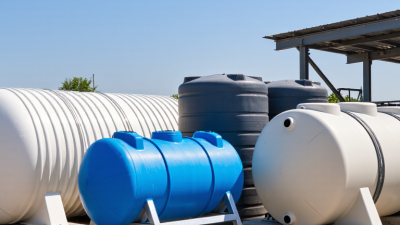
Choosing a water tank from another country involves more than comparing capacity and price. For buyers looking at plastic water tanks nz, the right option depends on its intended use, installation site, water source, and delivery destination. A compact tank beside a rural home has different demands from a large unit serving a farm or commercial property. Small details matter.
This guide introduces seven options worth comparing, with attention to practical features rather than bold claims. Check the stated capacity, tank dimensions, inlet and outlet positions, access openings, and material information. Ask whether the tank is designed for potable water if drinking-water storage is required. That sounds simple. It rarely is. Product descriptions can use similar terms while referring to different specifications, so request technical documents from the supplier when details are unclear.
For international buyers, freight and installation can change the real cost. Confirm how the tank is packed, what delivery includes, and whether local installers can connect compatible fittings. Also check the manufacturer’s guidance for the intended site, including support, exposure, and maintenance. A product sold in New Zealand may not be available for export, and shipping a bulky tank can be impractical. I would treat any shortlist as a starting point, not a verdict; supplier information and site conditions still need careful review. The comparisons ahead aim to help readers ask better questions and match a tank to actual needs.
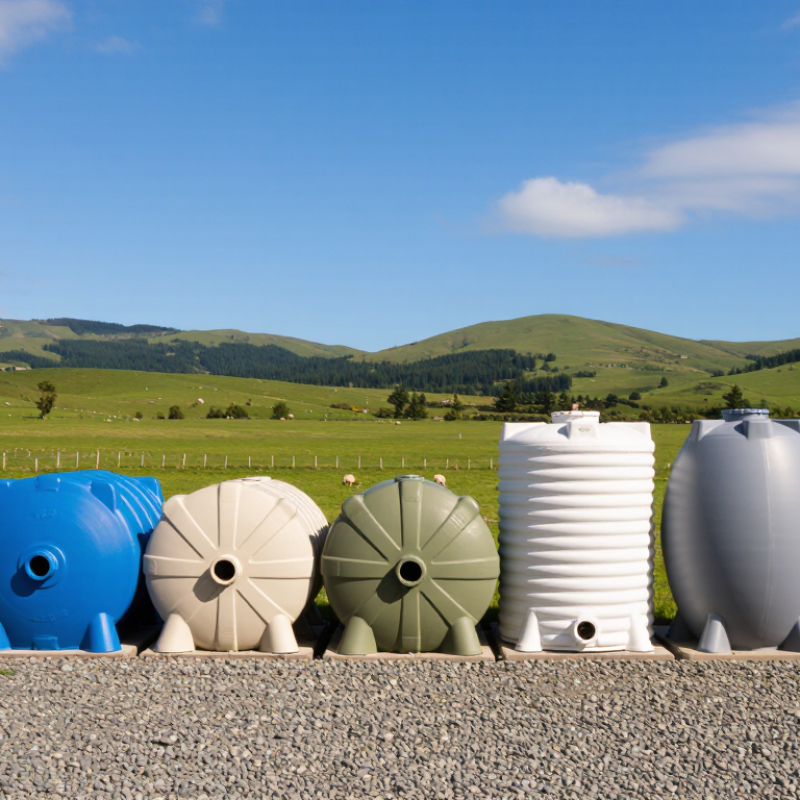
AS/NZS 4766:2006 sets design, material, manufacturing, and performance requirements for rotationally moulded polyethylene water tanks. For New Zealand buyers comparing tanks for export or local use, it offers a practical benchmark beyond appearance and advertised capacity. Check that the supplier identifies the standard and can provide relevant test or conformity documentation. A smooth surface is reassuring, but it proves little about wall consistency or long-term performance.
The standard matters because tanks face sunlight, temperature changes, and uneven support in everyday use. OECD’s Global Plastics Outlook reports that global plastic waste reached 353 million tonnes in 2019, with only 9% recycled. That figure is not specific to water tanks, but it underscores why material selection and product life deserve attention. Ask about UV resistance, installation requirements, and whether the tank is suitable for its intended water use; compliance alone does not confirm every tank is appropriate for drinking water. Small details count. A firm, level base and clear maintenance guidance can prevent avoidable stress, though these are sometimes overlooked.
How to Compare 7 Leading New Zealand Plastic Water Tank Brands
Compare seven New Zealand tank makers by evidence, not brochure claims. Check capacity, dimensions, outlet placement, access openings, and documented compliance with AS/NZS 4766:2006, the standard for polyethylene storage tanks. Ask for wall-thickness details and UV-stabilisation information. A dark tank can limit light entry, but installation and maintenance still matter. Small details matter. For global buyers, confirm export packing, shipping dimensions, replacement fittings, and warranty terms before paying a deposit. A tank that fits the site may not fit the freight container.
Tips: Request a drawing showing the tank’s footprint, inlet, overflow, and outlet. Compare usable capacity, not just advertised volume. Ask whether fittings are included, and who handles damage claims in transit. The WHO/UNICEF Joint Monitoring Programme’s 2023 report estimated that 2.2 billion people lacked safely managed drinking water in 2022. That figure reinforces the value of cleanable interiors, secure lids, and a clear maintenance plan.
For a fair comparison, score each option against the same checklist: material documentation, structural support requirements, delivery lead time, spare-part access, and after-sales response. Ask for written answers. Check whether the warranty covers UV exposure and site conditions, since exclusions can be easy to miss. Regional climate and installation method affect performance, so independent advice may be worthwhile. I would not choose on price alone.
An anonymised buyer’s guide to seven key comparison factors. It does not rank or attribute specifications to individual suppliers; confirm each tank’s current product documentation and local requirements before purchase.
| Comparison factor | What to compare | Useful fact | Buyer check |
|---|---|---|---|
| 1. Storage capacity | Nominal capacity in litres and the space available at the installation site. | 1 cubic metre equals 1,000 litres; 1 US gallon is approximately 3.785 litres. | Compare usable capacity, tank dimensions, access for delivery, and the intended demand—not capacity alone. |
| 2. Intended water use | Whether the tank is specified for rainwater, non-potable storage, or drinking-water contact. | A tank intended for water storage should not automatically be assumed suitable for drinking water. | For drinking-water use, request written confirmation for the exact model and check applicable water-contact requirements, such as AS/NZS 4020 where relevant. |
| 3. Material and construction | Polyethylene type, manufacturing method, wall design, and the product’s stated service conditions. | AS/NZS 4766 is a standard covering polyethylene storage tanks for water and chemicals. | Ask whether the exact tank complies with the relevant standard and request its declaration or supporting documentation. |
| 4. UV and outdoor exposure | Whether the tank is specified for outdoor exposure and what care or installation conditions apply. | Sun exposure and climate can affect outdoor products; performance depends on the tank’s formulation and design. | Check the supplier’s UV-resistance information, warranty conditions, and guidance for the intended site. |
| 5. Inlet, outlet, and overflow | Connection sizes, outlet position, overflow arrangement, and compatibility with the planned plumbing. | Tank fittings and plumbing layouts can vary by model; compatibility should be checked before installation. | Get a fittings diagram and confirm whether valves, screens, and connection adaptors are included or sold separately. |
| 6. Site and installation | Required base, full-tank weight, delivery access, and site-specific installation instructions. | Water weighs approximately 1 kilogram per litre, so water alone in a full 1,000-litre tank weighs about 1,000 kilograms. | Confirm the filled load, base requirements, and local site conditions with the supplier or a qualified installer. |
| 7. Warranty, delivery, and support | Written warranty terms, exclusions, delivery options, and access to replacement parts or support. | Warranty duration and coverage are product-specific and should be read in the applicable written terms. | For overseas purchases, confirm freight, import costs, delivery limitations, claims handling, and who provides after-sales service. |
Rainwater planning note: 1 millimetre of rainfall over 1 square metre of catchment produces 1 litre of rain before collection losses. Actual yield depends on rainfall, roof area, and system efficiency.
When comparing plastic water tanks in New Zealand, capacity is more than a storage figure. Water adds weight quickly. One thousand litres weighs approximately one tonne, before the tank, fittings, or support structure are included. A full 5,000-litre tank therefore holds roughly five tonnes of water. Check the tank’s empty weight and rated capacity before planning its location.
The load needs a stable, level base that can support the filled tank across its footprint. A compact tank may look light when empty, but its filled weight can be substantial. Check the ground for soft spots, slopes, and poor drainage; a few centimetres of uneven settling can create stress on the tank. Concrete, compacted aggregate, or another suitable foundation may be appropriate, depending on the site and supplier guidance.
For global buyers, shipping weight and installation weight are different calculations. Confirm how the tank will be unloaded and moved, then check that the final site can carry the full load. A raised platform or building floor needs particular care. Even a careful estimate can miss extra weight from connected pipework or accumulated sediment. It is worth checking twice. For uncertain ground or structural supports, ask a qualified local professional to assess the load rather than relying on tank capacity alone.
Global buyers should verify UV performance with test records, not colour alone. A black tank may still weaken after years of sun exposure. Request the resin specification, UV-stabiliser details, and weathering results, including exposure hours and retained strength. ASTM G154 describes accelerated UV testing, but a test result needs context: lamp type, cycle, and acceptance criteria matter. New Zealand’s strong summer sun makes this check practical, not cosmetic. The WHO/UNICEF Joint Monitoring Programme reported that 2.2 billion people lacked safely managed drinking-water services in 2022. Storage quality matters.
For potable use, ask for certification covering the complete tank, fittings, and seals—not merely a “food-grade” resin claim. NSF/ANSI/CAN 61 evaluates potential contaminants released by drinking-water system components. In New Zealand, also check whether the tank meets AS/NZS 4766:2006, while confirming that construction compliance does not automatically prove potable-water suitability. HDPE and other polyethylene grades are common, but resin source, additives, and manufacturing control affect performance. Request a current certificate and its scope. A clean datasheet is not the whole story; I would still check whether the lid seals tightly and the outlet avoids stagnant pockets. Looks can mislead.
For global buyers comparing the 7 best plastic water tanks in New Zealand, freight can change the real cost more than the tank price. UNCTAD’s Review of Maritime Transport 2024 reports that over 80% of world trade by volume moves by sea. Ask for packed dimensions, weight, loading method, and a landed-cost quote covering port handling and delivery inland. A tank may fit a container on paper, yet its fittings or pallet can complicate loading. Check this early.
Fittings deserve a close look. Confirm outlet size, thread type, material, and whether adapters are included; BSP and NPT threads are not interchangeable without the right connector. For drinking-water storage, request documentation for the tank’s intended use and applicable material requirements. AS/NZS 4766 covers rotationally moulded polyethylene storage tanks, but standard compliance alone does not confirm every fitting suits your installation. Small details matter.
Read warranty terms before purchase, especially exclusions for transport damage, site preparation, installation, and use. Get written instructions for the base: a level, firm surface should support the tank’s full footprint, not just its edges. Check access for cleaning, overflow direction, and local anchoring needs. I would verify these details with the supplier and installer, even when the product sheet looks complete. It can feel repetitive, but a missed outlet height is an expensive mistake.
Water weighs approximately 1 kg per litre, so a full 1,000-litre tank holds about 1 tonne of water. These capacity points illustrate the potential filled load for planning foundations and installation; they are not a brand or product comparison. For freight, check the tank’s empty packed dimensions and tare weight, and confirm fittings and warranty terms with the supplier.