

How to Choose Plastic Water Tanks NZ for Global Buyers?
Choosing plastic water tanks NZ suppliers offer requires more than comparing prices online. Global buyers must examine material quality, water use, climate, installation conditions, and export support. A tank beside a sunlit farm in Australia faces different stresses from one serving a cold island community. Polyethylene grade, UV protection, wall thickness, fittings, and tank shape all influence performance.
According to New Zealand tank specialist Peter Cocks, “A tank should be selected for the water, the site, and the people using it.” This practical view keeps purchasing decisions grounded. Buyers should ask whether the tank is designed for potable water, rainwater, irrigation, or industrial storage. They should also request technical drawings, food-contact documentation, warranty terms, and maintenance guidance. Reliable manufacturers explain these details clearly.
Do not ignore delivery conditions. A large tank may arrive flat-packed, rotationally moulded, or as a modular system. Port access, container dimensions, unloading equipment, and local installation skills can change the real cost. UV exposure deserves attention too. Dark colours may reduce light penetration, while certified stabilisers help protect the plastic in harsh sunlight.
Small details matter.
A poorly positioned outlet can complicate cleaning. An unsuitable base can create uneven pressure. Even an excellent tank may fail when installation is rushed. I admit that online specifications rarely reveal every site problem. Buyers should therefore involve qualified local installers and confirm regional water-quality requirements before ordering plastic water tanks NZ products. Careful comparison takes longer, but it reduces avoidable replacements and protects stored water over many years.
Understanding Plastic Water Tank Types in New Zealand
How to Choose Plastic Water Tanks NZ for Global Buyers
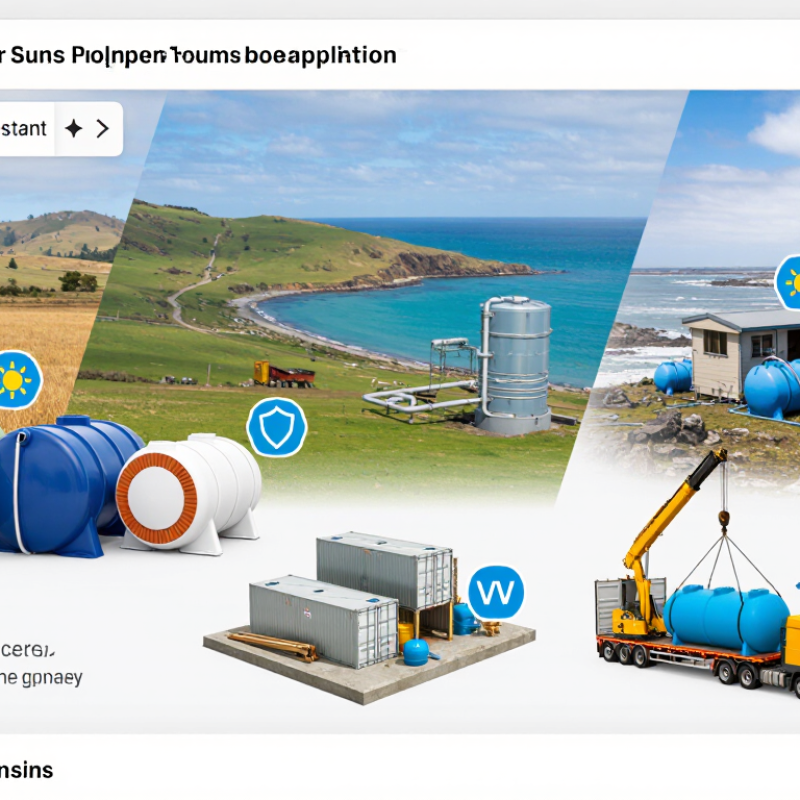
New Zealand plastic water tanks are commonly made from UV-stabilised polyethylene. They are lightweight, corrosion-resistant, and suitable for many climates. Vertical tanks work well on open land, while slimline tanks fit beside houses or narrow buildings. Underground models save surface space but require careful excavation and backfill. A transport tank may need stronger fittings and internal support.
For drinking water, check whether the tank material and fittings meet recognised potable-water requirements, such as AS/NZS 4020 where applicable. Confirm wall thickness, access openings, overflow design, and outlet size before ordering. Ask for test records and material information. Reliable manufacturers should explain rotational moulding quality, UV protection, warranty limits, and installation conditions. Global buyers must also check their own country’s water, building, and import requirements. One certificate may not satisfy every market.
Tips: Measure the installation area twice. Consider delivery access, roof runoff, local temperature, and foundation strength. A full tank is extremely heavy. Place it on a level, stable base and protect pipe connections from movement. Do not select capacity by appearance alone. Household demand, rainfall patterns, and cleaning access matter more. Some buyers overlook maintenance space, which becomes an expensive mistake. I would also question vague claims about “universal” use; tank performance depends on water quality and climate. A practical choice is not always the largest tank.
| Plastic Water Tank Type | Typical Capacity Range | Typical Shape and Footprint | Common Installation Location | Main Advantages | Important Considerations | Suitable Applications |
|---|---|---|---|---|---|---|
| Round Vertical Tank | Approximately 500–30,000 litres | Vertical cylindrical body with a circular footprint; requires a relatively wide, level base. | Above ground beside homes, farms, rural buildings, and commercial properties. | Strong structural shape, good storage efficiency, easy visual inspection, and broad availability in New Zealand. | Requires sufficient horizontal space and a properly prepared base. The tank must be protected from vehicle impact and excessive movement. | Rainwater harvesting, potable water storage, irrigation, livestock water, and general utility water. |
| Slimline Tank | Approximately 500–10,000 litres | Narrow, elongated vertical design intended for restricted side passages or narrow residential sites. | Along fences, beside houses, behind garages, and in urban areas with limited width. | Makes better use of narrow spaces and can be positioned close to walls where local access conditions permit. | Usually has a taller profile than a round tank. The installation surface must be level and strong enough for the full water weight. | Residential rainwater collection, garden irrigation, toilet flushing, and supplementary household water storage. |
| Underground Tank | Approximately 2,000–20,000 litres | Low-profile or horizontal body designed to be installed below ground. | Under driveways, lawns, gardens, or areas where above-ground storage is unsuitable. | Preserves visible outdoor space, reduces visual impact, and can be useful where land area is limited. | Requires excavation, drainage planning, correct backfilling, and access for inspection and cleaning. Groundwater and soil conditions must be assessed. | Residential developments, landscaped properties, commercial sites, and projects requiring concealed water storage. |
| Low-Profile or Squat Tank | Approximately 1,000–10,000 litres | Shorter vertical height with a wider base than a standard vertical tank. | Areas with height restrictions, under eaves, near low rooflines, and on exposed sites. | Lower overall height can simplify placement and may reduce visual impact in some locations. | Its wider footprint may require more ground area. A firm, level foundation remains essential. | Rural properties, low-clearance installations, garden water storage, and sites with planning or access constraints. |
| Transport or Baffled Tank | Approximately 200–5,000 litres | Portable tank, often horizontal or compact, with internal baffles to reduce water movement during transport. | Mounted on trailers, utility vehicles, service vehicles, or temporary support frames. | Designed for mobile water delivery and can reduce liquid surge when the tank is correctly filled and secured. | Must be restrained according to the tank and vehicle requirements. It is not automatically suitable for permanent storage or potable water. | Emergency water supply, dust suppression, agricultural spraying, construction, cleaning, and temporary water transport. |
| Modular or Panel Tank | Approximately 5,000–500,000 litres or more | Built from multiple panels or sections, allowing large storage volumes and access through restricted openings. | Commercial, industrial, institutional, and agricultural facilities. | Large capacity, adaptable configuration, and easier delivery to sites where a one-piece tank cannot pass through access points. | Requires professional assembly, a suitable foundation, correct sealing, and regular inspection of joints and fittings. | Fire-water reserves, industrial process water, large-scale rainwater harvesting, irrigation, and municipal or institutional storage. |
| Potable-Water Storage Tank | Approximately 500–30,000 litres for many domestic and rural installations | May be round, slimline, low-profile, or underground; the shape is selected according to site conditions. | Homes, farms, rural facilities, and buildings using collected rainwater or delivered drinking water. | Can provide an independent water reserve when manufactured from materials and components suitable for drinking-water contact. | Confirm that the tank, fittings, sealants, inlet screens, and cleaning procedures are suitable for potable water. Protect the tank from contamination and sunlight where required. | Drinking water, cooking, food preparation, and household supply systems, subject to local water-quality requirements. |
Related Posts
-

2026 Best RX Plastics Tanks for Global Buyers in Industry?
-
Top 10 Reasons to Choose RXP Water Tanks for Your Water Storage Needs?
-

The Ultimate Guide to Choosing the Best Plastic Storage Tanks for Your Needs
-
How to Choose the Best Plastic Water Storage Tanks for Your Needs?
-

Why Choose Plastic Water Storage Tanks?
-
How to Choose the Right Liquid Storage Tank?