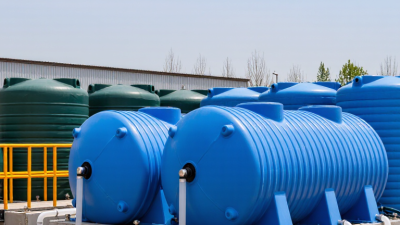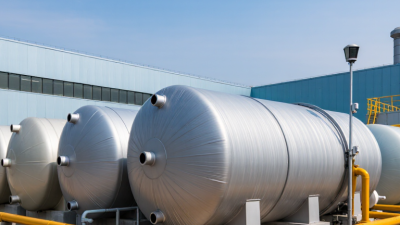
Choosing among China’s top 10 poly storage tank suppliers requires more than comparing prices. Poly storage tanks must match the stored liquid, working temperature, capacity, and installation environment. A tank holding drinking water faces different requirements from one handling fertilizers, wastewater, or industrial chemicals.
This guide introduces ten notable Chinese suppliers and explains how buyers can assess them more carefully. The selection should consider manufacturing experience, rotational molding capability, material traceability, quality testing, and export support. Certificates can help, but they should not replace practical verification. Ask for resin information, wall-thickness data, dimensional drawings, and test records before placing an order. Also check whether the supplier can provide custom fittings, reinforced designs, transport protection, and clear installation instructions.
Details matter.
A reliable manufacturer should explain how its tanks resist ultraviolet exposure, chemical contact, impact, and uneven site conditions. Factory photographs are useful, but video inspections and sample reviews provide stronger evidence. Customer references can reveal delivery consistency, communication quality, and after-sales response. Some suppliers may present impressive equipment yet offer limited technical support; this is an important weakness to examine.
The rankings in this article are not absolute. Supplier strengths can change by product type, project scale, and destination market. One company may excel at large industrial tanks, while another may handle smaller agricultural orders more efficiently. Buyers should compare documented performance rather than rely on promotional claims. With a practical review process, this list can help procurement teams identify suitable Chinese suppliers and avoid costly mismatches.
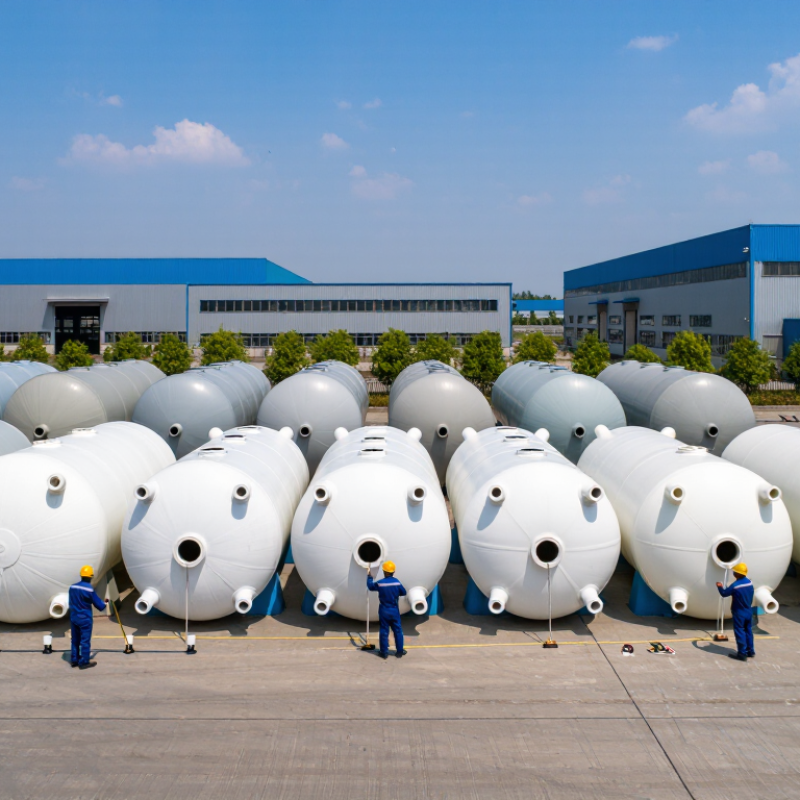
China Top 10 Poly Storage Tank Suppliers?
Poly storage tanks are commonly made from high-density polyethylene, or HDPE. Its typical density ranges from 0.94 to 0.97 g/cm³, according to ASTM D1505 and ISO 1183 measurement practices. This value is far below steel’s density, helping reduce transport and installation loads. A 5,000-liter tank can often be moved with basic lifting equipment, depending on its design.
Density is not a simple quality score. Resin grade, wall thickness, molding temperature, and additives can change performance. A tank wall may look uniform, yet stress can concentrate around fittings and the lower outlet. In practical inspections, check the base, threaded connections, and UV-exposed surfaces first. Small whitening marks deserve attention.
PlasticsEurope reported global plastics production at about 400.3 million tonnes in 2022. Polyethylene represented a major share of this output, supporting its broad use in chemical, agricultural, and water storage. However, market volume does not prove every tank is suitable. Manufacturers should provide resin specifications, dimensional drawings, welding or molding details, and test records. ASTM D1998 also provides guidance for rotationally molded polyethylene tanks. One weakness remains. Published density data may describe the raw resin, not the finished tank, so buyers should request batch-level documentation.
China’s leading poly tank suppliers should be ranked by documented ASTM D1998 performance, not factory size or advertising claims. ASTM D1998 covers rotationally molded polyethylene tanks for above-ground liquid storage. It addresses materials, wall thickness, impact resistance, and workmanship. Compliance is not automatic. It requires traceable production records and suitable testing.
Grand View Research’s 2024 plastic tanks market report indicates continued mid-single-digit growth, driven by chemical processing, agriculture, and water infrastructure. That growth increases the need for reliable Chinese suppliers. A serious top-ten assessment should review resin certificates, UV-stabilizer data, tank drawings, and batch inspection records. It should also verify dimensional consistency around fittings and outlet areas. Small details matter.
Factory audits add practical evidence. Inspectors should examine mold condition, temperature control, cooling procedures, and leak testing. An experienced buyer may request samples from different production dates. One sample proves little. ASTM D1998 compliance should be supported by independent laboratory reports, not only internal declarations. Suppliers with clear warranty terms and stable export documentation deserve higher positions. Delivery performance also matters. A perfect tank arriving late can still disrupt a project.
The ranking should remain transparent. No ranking is perfect. Reported compliance can change after a material, mold, or process change. Buyers should recheck current evidence before signing contracts.
Sources: ASTM International, ASTM D1998; Grand View Research, Plastic Tanks Market Report, 2024.
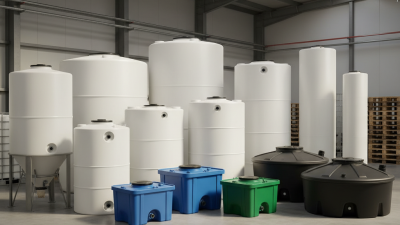
China’s top ten poly storage tank suppliers should be compared by capacity, product range, and manufacturing consistency. Their common sizes may start at 500 liters and extend to 50,000 liters. Small tanks suit workshops, farms, and compact water systems. Larger models support industrial storage and irrigation projects. Most suppliers offer vertical, horizontal, cone-bottom, and transportable tanks. Rotational molding is widely used because it creates seamless polyethylene walls. Still, wall thickness and resin quality can vary.
A reliable supplier profile should show tank dimensions, working capacity, material grade, and load limitations. It should also explain fittings, manways, vents, and outlet options. Ask for drawings before ordering. Photos are useful, but test records provide stronger evidence. Experienced manufacturers can discuss liquid compatibility and installation conditions clearly. Some suppliers provide custom colors or reinforced designs. Customization sounds attractive, yet it may increase cost and delivery time.
Tips: Confirm usable volume, not only nominal capacity. Request a sample inspection or factory video. Check whether the base needs concrete support. Review warranty terms carefully. I would not rely on price alone; a cheaper tank may need earlier replacement. Specifications can also be misunderstood, especially when “capacity” excludes freeboard.
| Profile | Typical Manufacturing Region | Primary Material | Typical Capacity Range | Tank Configurations | Key Products | Common Applications | Manufacturing & Customization Features |
|---|---|---|---|---|---|---|---|
| Supplier Profile 01 | East China | Rotomolded polyethylene | 500–30,000 L | Vertical, horizontal, conical-bottom | Water storage tanks, chemical tanks, dosing tanks | Water treatment, agriculture, chemical handling | UV-stabilized grades, molded-in fittings, custom inlets and outlets |
| Supplier Profile 02 | South China | Linear low-density polyethylene (LLDPE) | 500–20,000 L | Open-top, closed-top, transportable | Mixing tanks, liquid fertilizer tanks, rainwater tanks | Fertilizer storage, aquaculture, industrial liquids | One-piece molding, reinforced lids, optional level indicators |
| Supplier Profile 03 | Central-East China | High-density polyethylene (HDPE) | 1,000–50,000 L | Vertical flat-bottom, cone-bottom | Large-volume storage tanks, process tanks, buffer tanks | Municipal water, wastewater, industrial processing | Heavy-wall construction, access manways, flanged or threaded connections |
| Supplier Profile 04 | North China | Rotationally molded PE | 500–10,000 L | Low-profile, horizontal, underground-compatible | Septic tanks, grease interceptors, utility tanks | Construction, sanitation, commercial facilities | Impact-resistant shells, ribbed structures, configurable access ports |
| Supplier Profile 05 | East China | Food-contact polyethylene | 500–15,000 L | Vertical closed-top, jacket-ready | Food-processing tanks, potable-water tanks, ingredient tanks | Food and beverage processing, clean water storage | Smooth internal surfaces, hygienic fittings, inspection openings |
| Supplier Profile 06 | South-East China | Chemical-resistant HDPE | 1,000–30,000 L | Vertical, horizontal, bunded-system compatible | Acid tanks, alkali tanks, reagent tanks | Electroplating, water treatment, chemical processing | Material selection by chemical service, secondary-containment options |
| Supplier Profile 07 | Eastern Coastal China | UV-stabilized LLDPE | 500–25,000 L | Vertical, horizontal, slimline | Drinking-water tanks, mobile water tanks, irrigation tanks | Residential, agricultural, emergency water supply | Outdoor-rated resin options, pallet-compatible bases, custom color choices |
| Supplier Profile 08 | Central China | Industrial-grade polyethylene | 2,000–50,000 L | Large vertical, cone-bottom, hopper-bottom | Bulk storage tanks, sludge tanks, clarifier-feed tanks | Mining, wastewater treatment, industrial utilities | Large-diameter molding capability, reinforced support zones, custom discharge geometry |
| Supplier Profile 09 | South China | Cross-linked or reinforced polyethylene options | 1,000–20,000 L | Transport tanks, vertical, horizontal | Liquid transport tanks, sprayer tanks, chemical service tanks | Logistics, crop spraying, industrial maintenance | Mounting frames, baffles, lifting points, vehicle-installation customization |
| Supplier Profile 10 | East and South China | Multi-layer polyethylene | 500–40,000 L | Vertical, horizontal, open-top, custom process vessels | Water tanks, mixing vessels, dosing tanks, storage silos | Industrial water, agriculture, chemical and environmental projects | Multi-layer construction, agitator-ready lids, customized nozzles and fittings |
When comparing China’s top ten poly storage tank suppliers, wall thickness deserves careful inspection. A thicker wall is not automatically better. Uneven thickness can create weak areas around outlets, corners, and the tank base. Ask for dimensional reports, material specifications, and production photographs. A practical sample check should include caliper measurements at several points. Do not inspect only the smooth front surface.
UV resistance also affects outdoor service life. Reliable suppliers should identify the resin grade, UV stabilizer type, and related test method. Black tanks may resist sunlight better, but color alone proves little. Request accelerated weathering data and ask how the tank performs after repeated heat exposure. This detail is often overlooked. It should not be.
ISO 9001 certification indicates a controlled quality system, not perfect products. Verify the certificate scope, issuing body, and current validity. Then examine inspection records for molding, welding, fittings, and leak testing. Lead time needs equal attention. Confirm whether it covers raw material preparation, production, inspection, packaging, and shipment. A quoted seven-day lead time may exclude testing or port handling. In one early sourcing checklist, these exclusions were missed. That created avoidable pressure. A stronger review compares promised lead time with recent delivery records, capacity during peak seasons, and the supplier’s response when specifications change. Reliable evidence matters more than polished sales language.
When comparing China’s top poly storage tank suppliers, buyers should inspect more than catalog volume. Request resin specifications, molding records, and test reports for the exact tank model. Chemical compatibility is the first gate. Polyethylene may resist acids, alkalis, and salts, but concentration and temperature can change performance. Ask for a compatibility chart covering your chemical, operating temperature, and exposure time. Do not rely on “chemical resistant” as a complete answer. A small sample test can reveal swelling, softening, or stress cracking before installation. Check the fittings, gaskets, vents, and valves.
A 1.5 safety factor should appear in the design basis, not as marketing language. Confirm whether it covers liquid density, wall strength, hydrostatic load, wind, and seismic conditions. A dense liquid requires different calculations from water. Verify usable volume and freeboard. Warranty terms deserve equal attention. Request coverage periods for the tank body, fittings, welds, and leakage. Clarify exclusions for ultraviolet exposure, poor supports, chemical misuse, and installation errors. Get response times and replacement procedures in writing. Third-party inspection adds useful evidence. Still, paperwork is not proof. A cautious buyer may slow the purchase. That pause can expose missing calculations, unclear exclusions, or an unsuitable liner.
The chart compares approximate relative density values for commonly stored chemicals with a screening design value calculated using a 1.5 liquid-load factor. These figures are reference values only; final tank selection must be verified against concentration, temperature, exposure time, polyethylene grade, fittings, and the supplier’s chemical-compatibility documentation.
Warranty review should confirm coverage for tank bodies, welds, fittings, UV exposure, installation, operating conditions, and exclusions. A 1.5 factor is a purchasing-screening assumption, not a universal engineering requirement.