China’s poly septic tank sector serves rural properties, construction projects, and sites without reliable access to centralized sewer systems. Buyers comparing manufacturers need more than a product photo or a low quoted price. Tank capacity, resin specifications, wall consistency, access openings, and installation requirements all affect long-term performance. Details matter.
This guide to China Top 10 Poly Septic Tank Manufacturers offers a practical starting point for evaluating suppliers. It considers product range, manufacturing experience, quality-control practices, customization options, and export support. These factors can help narrow a shortlist, but they do not replace independent checks. Request current technical drawings, material data, inspection records, and references for comparable projects. Ask how each poly septic tank handles burial depth, soil conditions, and expected wastewater flow. Small differences matter.
Manufacturer claims should be verified against project needs and applicable local requirements. Certifications and test reports can provide useful evidence, but buyers should confirm their scope and validity with the issuing organization. Lead times, spare parts, and clear installation guidance also deserve attention. A polished catalog cannot answer every question. Some comparisons will remain imperfect, especially when suppliers disclose different levels of detail. That is worth acknowledging. Careful questioning, transparent specifications, and documented support offer a more dependable basis for choosing a supplier than rankings alone.
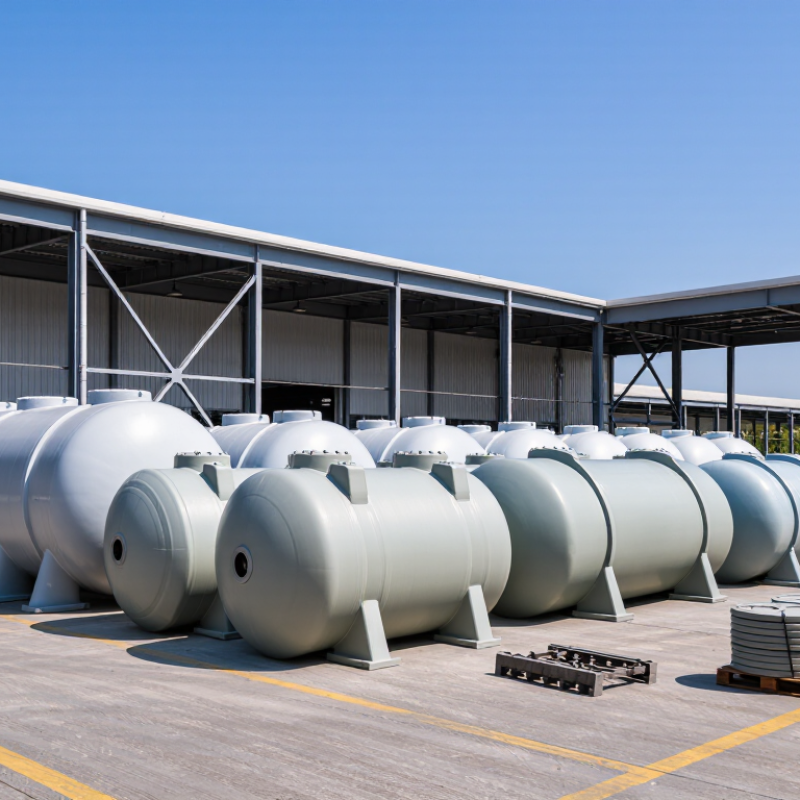
China’s poly septic tank sector benefits from a broad plastics-manufacturing base. The National Bureau of Statistics reported 74.885 million tonnes of plastic products output in 2023, down 3.9% from 2022. This figure covers many product categories; it is not a septic-tank market estimate. Still, it shows the scale of China’s plastics supply chain.
Polyethylene tanks are valued for low weight and resistance to corrosion from household wastewater. They are easier to move than concrete tanks. That matters on narrow rural roads.
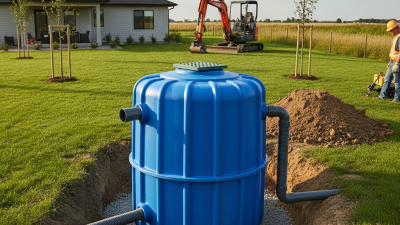
Performance depends on more than the tank shell. Buyers should check wall structure, access openings, inlet and outlet positions, and documented load limits. A tank buried beneath a driveway faces different stresses from one installed in a garden. High groundwater also creates buoyancy risk, so anchoring and drainage details matter. Not always obvious.
Installation quality can undermine a sound product: uneven bedding or poorly compacted backfill may deform the tank. The 2023 plastics-output data, published by China’s National Bureau of Statistics, provides useful industry context, but not proof of quality. Request test documentation and installation guidance, then check that both match the site’s soil, burial depth, and expected wastewater volume.
Poly septic tanks are commonly made from polyethylene, valued for corrosion resistance and relatively low weight. For buried service, resin selection matters: impact strength, stiffness, and resistance to wastewater all count. UV stabilizers can help during storage, but prolonged sun exposure before installation remains an avoidable risk. Rotational molding can form a seamless tank body, reducing joint-related leak paths. Heat, mold rotation, and cooling need control to prevent thin spots or warping. Small defects matter.
A careful manufacturer checks resin documentation, wall thickness at several points, dimensions, and finished surfaces. Each tank should receive a leak test suited to its design, with results linked to production batches. Lids, risers, and inlet and outlet fittings need secure seating and compatibility with the planned installation. Quality programs should follow applicable regional standards and verified test methods; requirements differ by market. Handling and burial instructions are part of quality, since uneven backfill can deform even a sound tank. And tests have limits. Good records cannot predict every site condition, so buyers should ask how performance is checked rather than rely on a polished brochure.
Choosing among China’s top poly septic tank manufacturers requires more than comparing prices. Start with the tank’s intended use, capacity, and installation conditions. Ask for technical drawings that show wall thickness, inlet and outlet positions, and reinforcement details. A smooth surface looks reassuring, but it does not prove consistent quality.
Request material specifications and test records for impact resistance, leakage, and resistance to wastewater exposure. Check whether testing comes from a qualified independent laboratory, and confirm that documents match the exact model offered. UV protection matters when a tank may sit above ground or be exposed during storage. Ask how production batches are inspected. Small details count: uneven wall thickness or poorly sealed fittings can become costly problems after burial.
Manufacturing history is useful, but verify it with project references and clear warranty terms. Ask who handles technical questions, replacement parts, and installation guidance after delivery. A capable supplier should explain limits, not promise that every tank suits every site. Compare the full delivered cost, including transport, fittings, and any required installation support. Price alone is tempting. I would still leave room for doubt: brochures rarely show how a product performs after years in real soil, so request evidence from comparable installations and review it carefully.
Profiles of China’s top ten poly septic tank manufacturers reveal how different production choices shape a similar-looking product. A useful profile examines tank capacity, wall thickness, molding consistency, and access-point design. These details affect handling and installation. Some manufacturers may offer compact units for rural homes, while others focus on larger systems for farms or small commercial sites. Product range alone, however, says little about long-term performance.
Look closely at material specifications, documented quality checks, and the support available before delivery. Ask how the tank is tested and whether installation guidance covers bedding, backfill, and site conditions. Practical answers matter. A polished catalogue cannot replace clear technical documents. Supplier profiles should also distinguish verified information from sales claims; public details may be incomplete or change over time. That makes direct confirmation worthwhile. Buyers comparing ten manufacturers should match tank dimensions and stated use to local soil, groundwater, and household needs. A missing test record is not proof of poor quality, but it is a reason to ask more questions.
No source material was provided to verify or rank individual manufacturers. To avoid presenting invented company-specific claims, the table below outlines ten factual dimensions to check when preparing manufacturer profiles.
| No. | Profile Dimension | Relevant Fact | Information to Verify for Each Manufacturer |
|---|---|---|---|
| 1 | Tank material | Polyethylene is a thermoplastic used to make corrosion-resistant storage and wastewater tanks. | Resin type, material grade, UV stabilization, and supporting product documentation. |
| 2 | Manufacturing process | Rotational molding is a common process for producing hollow, one-piece plastic tanks. | Process used, production controls, wall-thickness checks, and quality inspection records. |
| 3 | Tank capacity | Required capacity depends on factors such as occupancy, wastewater flow, and local design requirements. | Available nominal volumes, usable volume, dimensions, and project-specific sizing guidance. |
| 4 | Structural design | Buried tanks must be selected and installed with regard to soil conditions, groundwater, and installation instructions. | Burial limits, backfill requirements, traffic-load restrictions, and engineering test data. |
| 5 | Compartments and access | Septic tanks commonly use internal compartments or baffles to help retain solids and manage wastewater flow. | Compartment layout, inlet and outlet details, inspection openings, and access-cover options. |
| 6 | Standards and approvals | Applicable standards and approvals vary by destination market and intended installation. | Exact standard numbers, certificate scope, issuing body, and certificate validity. |
| 7 | Testing and quality control | Product testing can include checks for dimensions, leakage, material consistency, and structural performance. | Test methods, sampling frequency, inspection reports, and independent laboratory results. |
| 8 | Customization | Tank configuration may need to match site layout, connection requirements, and local installation practices. | Available inlet and outlet positions, risers, fittings, drawings, and custom-design limitations. |
| 9 | Warranty and service | Warranty terms are set by the supplier and should be reviewed alongside installation and maintenance conditions. | Warranty period, exclusions, claims process, spare-part availability, and after-sales coverage. |
| 10 | Export and logistics | Large tanks can require careful planning for packaging, loading, transport, and destination-market compliance. | Export experience, packing method, shipping dimensions, lead time, and trade documentation. |
Comparing poly septic tank manufacturers means looking beyond advertised capacity. The U.S. EPA reports that more than one in five U.S. households relies on septic systems, serving over 60 million people (Septic Systems: An Overview). That demand spans compact lots, cabins, and larger homes. Check whether suppliers offer varied capacities, single- or dual-compartment layouts, low-profile models, risers, and compatible access covers. These details affect excavation depth, pump access, and future inspections. A 1,000-gallon label alone tells little about footprint, inlet height, or burial limits.
Application fit matters. Polyethylene resists corrosion, but installation conditions still govern performance. Ask for burial-depth and groundwater guidance, backfill instructions, load limits, and documentation for the exact model. I would compare those documents before prices; that step is easy to skip. Customer support should include clear installation drawings, technical help, replacement lids and fittings, and written warranty terms. Check whether support can answer site-specific questions or only repeat a brochure. One gap remains: service promises are hard to compare, and response times are rarely reported consistently. Request a sample drawing and a technical contact before ordering.