Choosing China-based suppliers for rxp water tanks requires more than comparing unit prices. Buyers need clear evidence on material grade, tank capacity, UV resistance, fittings, and quality-control procedures. Ask for product specifications, inspection records, and photographs of finished tanks. Check whether stated capacities match usable volume. Small details matter.
The WHO/UNICEF Joint Monitoring Programme reported that 2.2 billion people lacked safely managed drinking-water services in 2022. This is a public-health measure, not a water-tank market estimate. Still, it highlights why dependable storage and documented product performance matter. Water-policy expert Professor Asit K. Biswas is often quoted as saying, “Water is not scarce; it is badly managed.” Buyers should treat that as a reminder to examine system design, not as proof that any tank solves a water-access problem.
For global buyers, supplier screening should cover manufacturing experience, sample testing, export packaging, and after-sales support. Request test methods and results, rather than relying on broad claims such as “premium quality.” Confirm how the supplier handles leaks, replacement parts, and delivery damage. A low quotation may leave important costs unclear. That deserves a second look. This guide compares China’s rxp water tanks suppliers through practical sourcing criteria, while distinguishing verifiable evidence from marketing language. Verify each specification against your project’s needs before placing an order.
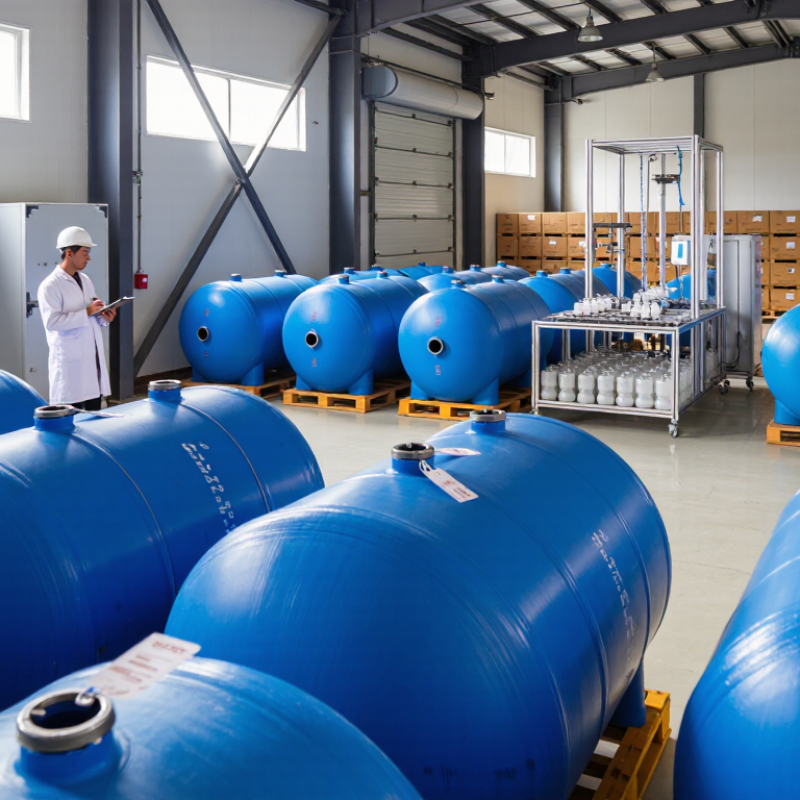
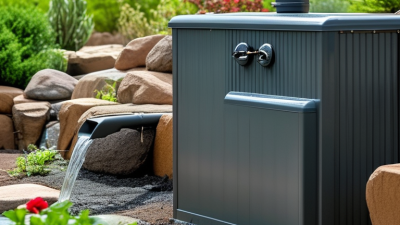
RXP water tanks rely on material and construction choices suited to their operating conditions. Depending on the design, materials may include UV-stabilized polyethylene, fiberglass-reinforced plastic, or coated steel. Each responds differently to sunlight, temperature changes, and stored-water chemistry. Details matter. Buyers should check material specifications and confirm that internal surfaces suit the intended water use.
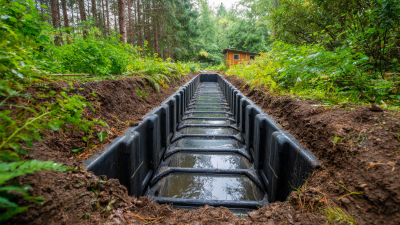
Tank construction affects strength, access, and maintenance. A molded body may reduce seam-related leak points, while sectional tanks can fit through restricted access routes. Inspect joints, support bases, inlet and outlet fittings, and the cover before installation. A tank placed on uneven ground can develop stress, even when its walls appear substantial. Not always obvious.
Core storage functions include holding potable water, process water, rainwater, or reserve supplies. Capacity should reflect actual demand, refill frequency, and available installation space—not just a rough estimate. Keep inspection access clear, and check for sediment, damaged seals, or discolored surfaces during routine maintenance. No tank is maintenance-free. Specifications can also vary between suppliers, so compare drawings, material data, and warranty conditions rather than relying on appearance alone.
When comparing RXP water tank suppliers, verify the tank’s capacity and design against the intended service. ASTM D1998 provides criteria for the design and manufacture of vertical polyethylene storage tanks. A listed capacity may describe nominal volume, not the usable amount below the overflow or outlet. Ask for the working capacity and key dimensions. Small details matter.
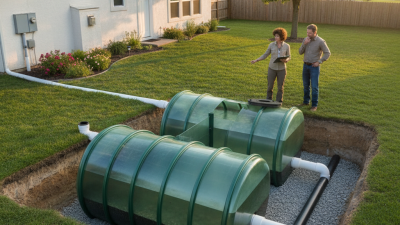
Request a dimensioned drawing showing diameter, height, wall construction, fittings, and support requirements. Check that the design basis matches the stored liquid, its specific gravity, and expected operating temperature. Water is a common application, but temperature and site conditions still matter. Foundation details matter too. An uneven base can create stress that a drawing alone will not reveal. That point is easy to miss.
Ask for material records, inspection documentation, and evidence showing which ASTM D1998 edition and design assumptions were used. Confirm that the proposed configuration—not merely a similar tank—matches the supplied documents. ASTM alignment does not automatically prove suitability for every site or liquid; confirm chemical compatibility and seek qualified engineering review when conditions differ from standard assumptions. A polished specification can feel reassuring, yet one unanswered question about usable capacity may still affect the installation.
| Evaluation dimension | What to verify | Documentation to request | Buyer verification action |
|---|---|---|---|
| Applicable standard | Confirm whether the tank is designed and manufactured to the applicable edition of ASTM D1998, which covers polyethylene upright storage tanks. | Standard edition, technical data sheet, design documentation, and a written statement identifying the tank models covered. | Check that the stated standard and edition match the purchase specification. Do not treat a general reference to ASTM D1998 as proof that every model complies. |
| Nominal capacity | Compare the supplier’s stated nominal capacity with the tank’s dimensions, intended liquid, and required operating volume. | Model-specific capacity drawing showing diameter, overall height, straight-side height, and stated nominal capacity. | Ask the supplier to distinguish nominal capacity from geometric shell volume and usable operating volume, including any required freeboard. |
| Volume cross-check | For a cylindrical section, geometric volume can be estimated as π × (inside diameter ÷ 2)² × liquid height. This estimate does not account for tank features or operating limits. | Dimensioned drawing with the measurement basis stated, such as inside or outside diameter. | Use the calculation as a screening check only; have the supplier reconcile any difference with the tank’s shape, bottom, roof, fittings, and declared capacity. |
| Design conditions | Verify that the design is suitable for the specified liquid, specific gravity, operating temperature, installation location, and service conditions. | Design-condition schedule and confirmation of the liquid and operating limits used for the proposed tank. | Provide the actual service details in the enquiry. Do not assume a water tank is suitable for a different liquid or for conditions outside its stated limits. |
| Polyethylene material | Confirm the polyethylene material and the supplier’s stated material properties for the proposed tank construction. | Material specification and applicable batch or quality records, where available. | Check that the material information applies to the quoted model and intended service; request clarification for chemical compatibility questions. |
| Tank configuration | Verify tank orientation, support arrangement, bottom and roof configuration, and any structural or installation requirements. | General arrangement drawing, installation instructions, and support or foundation requirements. | Check the proposed arrangement against the site layout, access, foundation, and local installation requirements before ordering. |
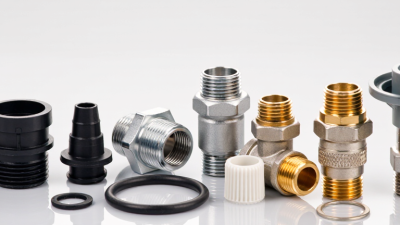
| Openings and fittings | Confirm the number, location, size, and connection type of nozzles, manways, vents, drains, and other requested fittings. | Approved nozzle schedule and a drawing showing opening locations and connection details. | Match every opening to the piping layout and required function. Confirm whether fittings are included in the quoted scope. |
| Outdoor exposure | For outdoor service, verify the supplier’s stated suitability for the site’s exposure and environmental conditions. | Product data and written guidance covering outdoor use, inspection, and any applicable protection or maintenance requirements. | Confirm exposure conditions, including sunlight and local climate, with the supplier; do not infer outdoor suitability from color alone. |
| Quality inspection | Clarify the production inspections and acceptance checks performed for the ordered model. | Inspection and test plan, inspection records, and the agreed acceptance criteria. | Agree on inspection scope and documentation before production. Request model-specific records rather than generic promotional material. |
| Transport and delivery | Check shipping dimensions, lifting and handling requirements, packaging, and access restrictions at the destination. | Transport dimensions, handling instructions, packing details, and delivery terms. | Confirm route, unloading equipment, site access, and destination requirements before finalizing the order. |
| Supplier comparison | Compare equivalent capacity, design conditions, configuration, included accessories, documentation, and delivery scope. | Itemized quotation and a model-specific technical submission. | Use the same specification for each quotation. Evaluate technical conformity separately from price and lead time. |
Note: ASTM D1998 is a tank specification, not an automatic certification of a supplier or every product offered by that supplier. Confirm the applicable standard edition and obtain project-specific technical documentation before purchase. Final selection should account for the stored liquid, operating conditions, installation, and applicable local requirements.
A water tank can look clean and still affect drinking-water quality.
The WHO/UNICEF Joint Monitoring Programme reported that 2.2 billion people lacked safely managed drinking water in 2022. Safe storage matters.
NSF/ANSI/CAN 61 evaluates the health effects of materials that contact drinking water, including tank linings, fittings, and seals. It does not certify a tank’s structural strength or guarantee compliance with every local rule. That distinction is easy to miss.
For global buyers, request current certification records for the exact tank model and all wetted components. Check whether the listing covers the intended water temperature and use conditions. A certificate for a resin or fitting alone may not cover the assembled tank. Local authorities may also require separate approvals, testing, or lead-content documentation; requirements vary by country and application. Confirm these before shipment, not after the tank is installed.
Paperwork can be messy. So can a retrofit.
WHO/UNICEF’s figures come from Progress on Household Drinking Water, Sanitation and Hygiene 2000–2022, published in 2023; standard scope should be verified against the current NSF/ANSI/CAN 61 edition and local rules.
For global buyers, an ISO 9001 certificate is a useful starting point, not a tank-performance guarantee. The ISO Survey of Management System Standard Certifications 2022 recorded 1,265,216 valid ISO 9001 certificates across 189 countries and economies. Certification is widespread, but it does not prove that a specific factory controls every tank batch. Check the issuing body, certificate scope, site address, and recent corrective-action records. Paper is not proof.
If an RXP model is made from polyethylene, compare its design and test evidence with ASTM D1998-21, which covers vertical polyethylene storage tanks. Request wall-thickness measurements, dimensional checks, hydrostatic leak results, and UV-weathering data where relevant. For potable-water use, ask for evidence that wetted materials meet applicable drinking-water contact requirements in the destination market. A test report should identify the tested model and method, not just show a passing result.
Traceability should connect each finished tank to its resin lot, production date, inspection results, and shipment record. WHO and UNICEF’s 2023 Joint Monitoring Programme report estimated that 2.2 billion people lacked safely managed drinking-water services in 2022. That figure makes reliable storage controls worth examining closely. I would still question a polished quality file if it omits failed tests or retest explanations. Check the batch.
Export readiness for RXP water tanks begins with a clear delivery plan, not just a price quote. UNCTAD’s Review of Maritime Transport 2024 reports that over 80% of world trade by volume moves by sea. That makes packing and port handling practical priorities. Confirm tank dimensions, empty weight, lifting points, and allowable stacking before booking freight. Protect openings from dust and moisture, and use supports that prevent movement without deforming the tank. Small gaps matter.
Incoterms 2020 should name the exact delivery point. Under DAP, the seller arranges transport to the named place, while the buyer handles unloading and import clearance. Under DPU, unloading is the seller’s responsibility. ICC guidance makes clear that the chosen rule allocates specific costs and risks; it does not replace a detailed sales contract. For large tanks, agree who supplies lifting equipment and who checks the receiving surface. A prepared foundation and clear truck access can prevent costly delays. Installation details are easy to overlook.
Tips: Ask for a packing list, loading photos, and a simple lifting diagram before dispatch. Confirm local crane access, ground bearing capacity, and the route from truck to foundation. Do not assume a tank can be stacked because it looks rigid; follow the supplier’s documented limits.
Seller obligations across selected Incoterms® 2020 checkpoints
Each bar counts how many of five checkpoints are assigned to the seller under the selected rule: export clearance, main carriage, cargo insurance, import clearance, and unloading. This is a checklist count, not a cost or risk score. Incoterms® do not define product specifications, packaging standards, or installation work; agree these separately in the sales contract and confirm transport, lifting, and site-installation plans before shipment.