Choosing underground water storage tanks in 2026 starts with the job the tank must do, not its advertised capacity. A household collecting roof runoff has different needs from a farm, fire reserve, or commercial site. Estimate daily demand, refill rates, and the dry-period buffer using real records where possible. Guesswork is common. It is also expensive.
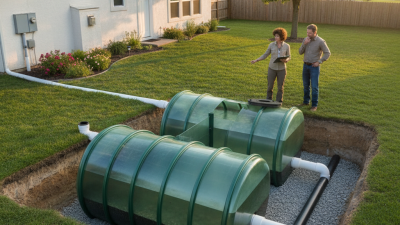
Before comparing prices, check site conditions: soil type, seasonal groundwater, excavation depth, and expected surface loads. A tank beneath a driveway needs a suitable load rating and clear installation guidance; a garden-only location may not. Ask manufacturers for material specifications, access-hatch dimensions, and maintenance instructions. Confirm the tank is suitable for its intended water use, especially if the water may be consumed. Product certifications and technical documents should be independently verifiable. Compatibility matters.
Capacity alone can mislead. A larger unit may reduce overflow but increase excavation, transport, and pumping costs. A small access opening can also make inspection awkward years later. Compare whole-life costs, not just the quote: bedding, backfill, connections, alarms, and periodic cleaning all count. Ask installers how they handle high water tables and unexpected soil conditions. Their answers reveal more than a glossy brochure. No selection method removes uncertainty; site assessments can be wrong, and requirements vary. Use this guide as a decision framework, then verify details with qualified local professionals and current product documentation.
Choosing an underground water storage tank starts with a realistic estimate of demand. One cubic metre of water weighs about one metric tonne. A 5 m³ tank, when full, therefore holds roughly five tonnes of water. That is substantial. The tank itself and its fittings add more weight.
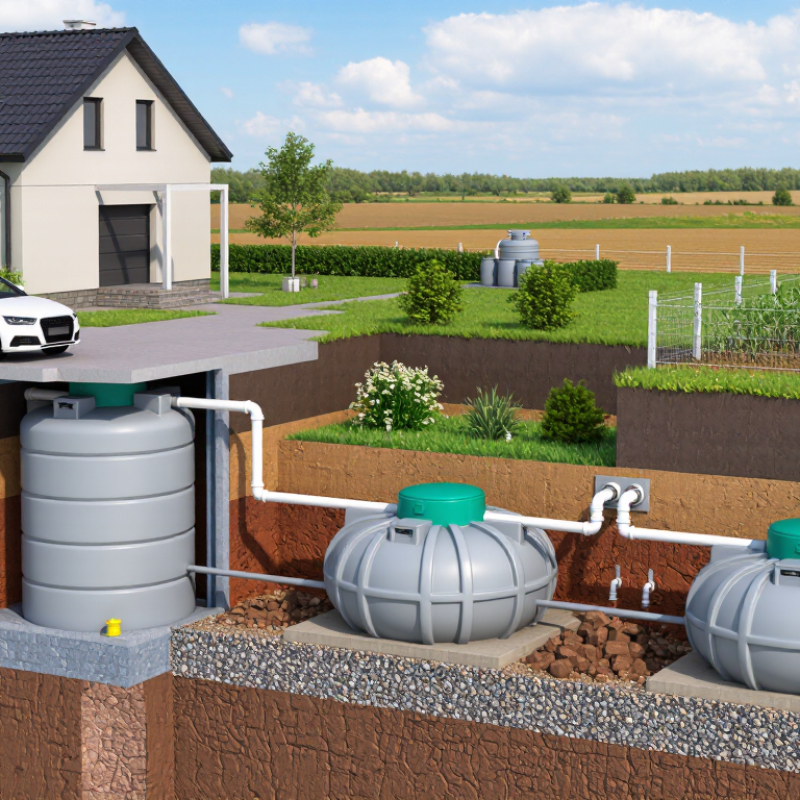
This figure helps explain why tank selection cannot rely on volume alone. Check the manufacturer’s stated burial depth and loading limits, then consider the site. Soil type, groundwater level, cover depth, and nearby vehicle traffic can all affect the installation. A tank beneath a driveway may need different support from one under a garden. Do not assume that buried means protected.
Demand estimates also deserve a second look. Record typical daily use, account for dry periods or interruptions, and decide how much reserve is practical. A larger tank is not automatically safer; it may need more excavation and stronger structural support. The one-tonne-per-cubic-metre rule is a useful planning estimate, not an engineering design. Have a qualified professional verify site loads and installation requirements before choosing the final capacity.
Estimate demand: 1 m³ of stored water weighs about 1 metric tonne.
Water only: the approximate mass values use a density of 1,000 kg per cubic metre. Tank weight, soil loads, groundwater pressure, and installation conditions are not included; consult a qualified professional when selecting a tank.
Start with the water the site must actually hold: daily demand, refill rate, and the longest realistic interruption. Estimate usable volume, not just advertised capacity. Sediment space, inlet height, and pump limits can reduce what reaches a tap. For example, four people using 60 gallons each daily need 240 gallons before irrigation or leakage. Sizing is rarely tidy. The U.S. EPA’s 2023 Drinking Water Infrastructure Needs Survey and Assessment estimated $625 billion in drinking-water infrastructure needs over 20 years. That figure is not a tank-sizing formula, but it highlights the value of planning for reliable, maintainable systems.
For potable water, verify that the exact tank model and water-contact components meet NSF/ANSI/CAN 61. The standard evaluates potential health effects from materials and components contacting drinking water; it does not certify tank capacity or underground load strength. Ask for current certification documentation covering the tank, liner, seals, and fittings. A potable-water claim alone is not proof. Material choice matters, too: polyethylene resists corrosion but needs approval for burial loads; fiberglass performance depends on its construction; concrete needs well-designed joints and suitable coatings. Check groundwater buoyancy, soil conditions, and any vehicle loads above the tank. A neat plan can still miss a detail: record the required cover depth and installation conditions before comparing quotes.
Compare the intended use, required usable volume, site conditions, material, installation requirements, and applicable potable-water approvals before selecting an underground tank.
| Selection factor | What to evaluate | Practical data or comparison | Selection guidance |
|---|---|---|---|
| Intended use | Potable water, irrigation, rainwater reuse, or emergency storage | Potable-water systems require suitable tank materials and components that meet applicable drinking-water requirements. Non-potable storage may have different approval requirements. | State the intended use when requesting specifications. Do not assume a tank approved for non-potable water is suitable for drinking water. |
| Capacity | Daily demand and the number of days of storage required | Planning formula: daily demand × days of reserve = target usable storage. For example, an assumed demand of 200 US gal/day for 3 days gives 600 US gal (about 2,271 L) of usable storage. | Use measured or locally appropriate demand rather than treating the example as a universal household standard. Confirm usable volume, not only nominal tank capacity. |
| Usable versus nominal volume | Dead storage, operating levels, pump intake, and any required air space | The liquid volume available to the system may be less than the tank’s stated nominal capacity, depending on its design and installation. | Ask for the usable-volume figure and confirm how the tank’s inlet, outlet, overflow, and pump arrangement affect it. |
| High-density polyethylene (HDPE) | Tank design, soil and groundwater conditions, burial depth, and backfill requirements | HDPE tanks are relatively lightweight and resistant to many forms of corrosion. Their suitability for burial depends on the specific tank design and installation conditions. | Follow the manufacturer’s excavation, bedding, backfill, cover-depth, and groundwater instructions. Obtain engineering advice when site loads or conditions exceed the published limits. |
| Fiberglass-reinforced plastic (FRP) | Structural rating, resin and liner compatibility, joints, and installation method | FRP tanks can be designed for underground service and are resistant to many corrosive environments; performance depends on the tank construction and site conditions. | Verify the model’s burial and loading ratings, potable-water approval where needed, and installation instructions. Inspect the tank and connections for damage before burial. |
| Concrete | Precast or cast-in-place construction, joints, waterproofing, and water chemistry | Concrete tanks are heavy and can be used underground. Their construction, joints, and any internal coating or lining affect watertightness and water-contact suitability. | Check structural design, sealing details, and the approval of any coating or lining intended for potable-water contact. Follow local requirements for concrete and water storage. |
| Steel | Corrosion protection, coating or lining, and maintenance access | Buried steel is exposed to soil-side corrosion risks. Protection systems and water-contact linings must be appropriate for the installation and intended use. | Request documented corrosion-protection details, inspection and maintenance requirements, and potable-water approvals for all surfaces that contact drinking water. |
| Groundwater and soil | Seasonal groundwater level, soil type, slope, and flood or drainage conditions | Groundwater can create buoyancy forces on an empty or partly empty buried tank. Soil and surface loads also affect the structural requirements. | Check site conditions before purchase. Use the tank manufacturer’s installation limits and a qualified designer or engineer where groundwater, unstable soil, traffic loads, or deep burial are involved. |
| Access and connections | Manway or access opening, vent, overflow, inlet, outlet, and cleaning access | Access and connection locations vary by tank model and system layout. Safe access is needed for inspection and maintenance. | Plan the layout before excavation. Confirm that covers, vents, and access points remain accessible and comply with local plumbing, building, and safety requirements. |
| Potable-water certification | Certification or listing to NSF/ANSI/CAN 61 for drinking-water contact | NSF/ANSI/CAN 61 addresses health effects of materials and products that contact drinking water. Certification applies to specified products and conditions of use; it does not establish a tank’s burial strength or capacity. | For potable water, verify the exact tank model and relevant wetted components in current certification records, including any limits on temperature, use, or installation. Confirm local acceptance. |
| Local approvals and installation | Permits, setback rules, plumbing requirements, and installation standards | Requirements vary by jurisdiction and can depend on the water source, tank location, use, and connection to a building or public supply. | Check with the local authority and qualified installer before ordering. Keep product specifications and installation records for future inspection and maintenance. |
Important: This comparison is a planning aid, not a substitute for site-specific engineering or local code review. A material name alone does not establish potable-water suitability; verify the exact product and its approved conditions of use.
When choosing an underground water storage tank in 2026, measure the seasonal high groundwater level, not just the level on installation day. Water pressure increases by about 9.8 kPa for every meter of depth below the groundwater surface. If groundwater stands two meters above the tank base, the base may face roughly 19.6 kPa of external water pressure. That matters. A dry-season inspection can miss the pressure that arrives after heavy rain.
Also assess soil type, burial depth, and nearby vehicle loads. Clay can hold water around the tank, while loose or saturated soil may shift during installation. An empty tank can also face buoyant uplift when groundwater rises. Check twice. Compare site conditions with the tank’s rated burial and groundwater limits, and ask a qualified engineer to review uncertain or high-water sites. I used to think burial depth alone told the story; it doesn’t. The groundwater level relative to the tank is a crucial part of the calculation, though site measurements can be imperfect. Keep records of test dates, soil observations, and the planned finished grade.
Burial depth is not simply the distance between the tank and the lawn. Check the installation manual for the permitted soil cover, measured from the tank crown to finished grade. Too little cover can leave the structure exposed to concentrated loads; too much can exceed its design limits. Soil type, groundwater, and compaction also matter. A sandy trench and wet clay site do not behave alike.
Check the tank’s rated surface load against actual use above it. A garden path may face foot traffic, while a driveway can expose the tank to heavy axle loads. “Car rated” is not enough detail. Ask for documented load ratings and any required concrete slab, risers, or load-distribution design. Keep heavy vehicles away during installation, when backfill may be loose. This is where plans can get messy: site drawings often show a neat lawn, then a delivery truck needs access. Confirm the final layout with a qualified installer or engineer, especially when traffic loads or groundwater conditions are uncertain. Don’t guess.
When comparing underground water storage tanks, inspect the access plan before comparing capacity. Can a person reach the hatch safely? Is there room to remove a pump without excavating a path? Access matters. A narrow opening can turn a routine inspection into a costly job. Check whether the design allows sediment removal, ventilation, and inspection of seams or liners. Ask where the pump sits, how it is lifted, and whether the controls remain accessible after backfilling.
Pumping needs depend on tank depth, pipe length, and the height water must rise. Request a pump calculation based on your actual flow rate and installation, not just a quoted horsepower.
The U.S. EPA’s 2023 Drinking Water Infrastructure Needs Survey and Assessment estimates $59.4 billion in storage-system needs over 20 years.
That figure covers public systems, not individual tanks, but it shows why access and upkeep deserve attention. Small details add up.
Expected service life depends on material, groundwater, soil chemistry, installation, and maintenance. A single lifespan number can be misleading. Ask for the documented design life, inspection schedule, corrosion or liner protections, and replacement access in writing. Compare those answers with applicable AWWA tank standards, such as D100 for welded steel tanks. A warranty is not a service-life estimate. I would also check the site’s drainage assumptions; they are easy to overlook, and they may change over time.