10 Best Poly Tanks for Water Storage in 2026?

Choosing the best poly tank in 2026 requires more than comparing prices, colours, or advertised capacities. A dependable tank must withstand sunlight, temperature changes, water pressure, installation stress, and years of repeated use. Small details matter, including wall thickness, mould quality, fittings, venting, access openings, and foundation preparation.

Recent market analyses from Grand View Research and MarketsandMarkets identify continued growth in water-storage systems, driven by drought risk, agricultural demand, rainwater harvesting, and industrial water management. The U.S. Environmental Protection Agency also recognises water reuse and conservation as practical tools for improving long-term resilience. These trends make polyethylene storage increasingly relevant, but market growth does not guarantee product quality.

Rotational-molding specialist David A. Kazmer has stated, “Good design begins with understanding how the material will actually be used.” That principle applies directly to every poly tank reviewed here. A large capacity rating may look impressive, yet a poorly supported base can cause deformation, leakage, or premature failure. It is easy to overlook.

This guide compares ten leading poly tanks using practical criteria: material quality, structural design, UV protection, installation requirements, warranty coverage, maintenance needs, and customer feedback. We also consider realistic use cases, from a compact backyard tank under a gutter downpipe to a large agricultural unit beside a dusty irrigation field. No single model suits every property. That is the uncomfortable part. The “best” tank depends on water quality, climate, available space, budget, and installation discipline.
10 Best Poly Tanks for Water Storage in 2026?

Poly Tank Basics: HDPE Grades, 500–10,000-Gallon Capacities, and UV Ratings

Poly tanks remain practical for farms, workshops, emergency reserves, and household water systems. Common capacities run from 500 to 10,000 gallons, but the largest size needs careful site planning. A full 1,000-gallon tank weighs more than 8,000 pounds. Your foundation must carry that load without settling.

HDPE HDPE is valued for impact resistance and chemical stability. Still, “HDPE” alone does not prove drinking-water suitability. Ask for the resin grade, compliance documentation, and storage-temperature limits. Virgin, food-contact-grade material is usually the safer choice for potable water. Industrial grades may suit irrigation or process water, but not every application. Fit matters.

Sun exposure changes the buying decision. UV-stabilized polyethylene can resist cracking and chalking, yet UV protection is not always expressed through one universal rating. Look for additive details, test results, and a clear outdoor-use warranty. Dark tanks often block more light, reducing algae growth inside. However, color is not a complete UV specification. A tank placed beside a bright wall may receive reflected heat and sunlight. I once underestimated that effect; the installation needed more shade than expected. Leave room for expansion, inspect fittings for stress, and avoid placing the tank directly on uneven gravel. For a 5,000- to 10,000-gallon model, confirm delivery access before ordering. A perfect tank is useless if the truck cannot reach the pad.

Evaluation Criteria: ASTM D1998, NSF/ANSI 61, FDA Compliance, and Wall Thickness

The 10 Best Poly Tanks for Water Storage in 2026 should be judged by more than price and capacity. A reliable evaluation starts with documented compliance and practical construction details.

ASTM D1998 is a key reference for rotationally molded polyethylene tanks. It addresses design, materials, manufacturing, and performance expectations. Ask for current test records, not only a printed claim. NSF/ANSI 61 matters when stored water may be used for drinking. This standard examines materials and components that contact potable water. FDA compliance can also indicate suitable food-contact materials, but it should not replace potable-water certification. The two requirements address different concerns.

Wall thickness deserves close inspection. Thicker walls can improve strength, but thickness alone does not prove quality. Uneven areas around the base, outlets, or molded corners may create weak points. Use a flashlight and inspect the interior surface. A flexible gauge can reveal variations that photographs hide. Darker tanks may also need proven ultraviolet protection for outdoor placement. Check the resin specification and warranty language.

In field evaluations, I look for stable bases, accessible fittings, and clear maintenance instructions. Small details matter. A poorly supported tank can deform, even with heavy walls.

I have also seen certification language misunderstood by buyers. It is easy to trust a logo without checking its scope, date, and exact model. No inspection is perfect, and supplier documents can be incomplete. That uncertainty should affect the final ranking.

Top 10 Poly Tanks Compared by Capacity, Shape, Fittings, Warranty, and Cost

Choosing the best poly tank for water storage in 2026 starts with capacity, not appearance. A 500-gallon tank suits small gardens, cabins, or emergency reserves. Larger properties may need 1,500 gallons or more. Leave room for expansion, but avoid buying excessive capacity. Stored water can become neglected.

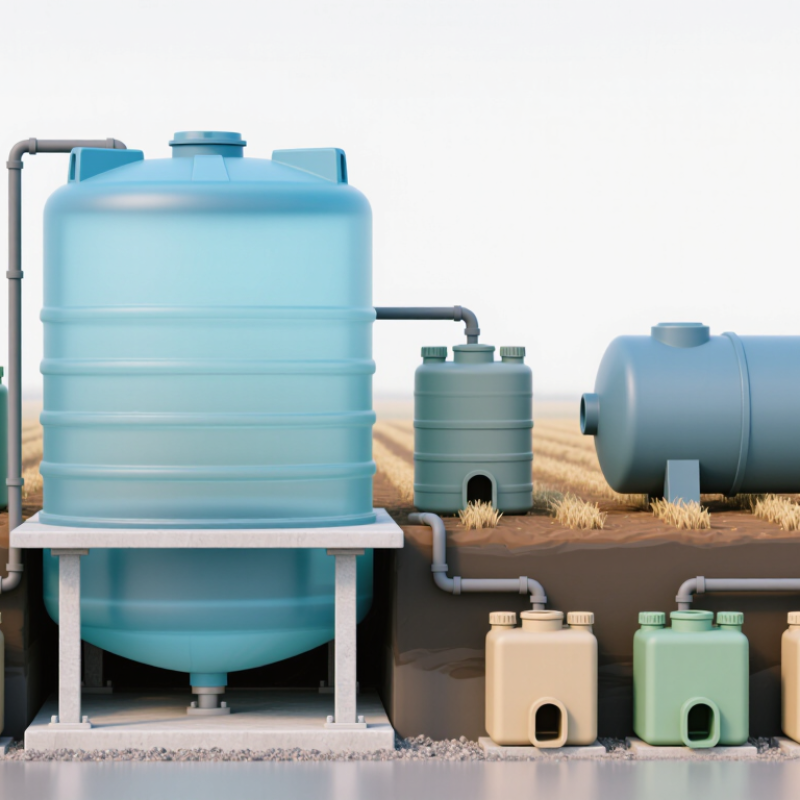
Shape affects installation and maintenance. Vertical tanks save ground space and offer useful water pressure from height. Horizontal tanks fit beneath decks or beside buildings. Low-profile models work well in windy locations. Measure twice. Check door widths, access routes, base strength, and clearance for cleaning.

Fittings deserve close inspection. Look for corrosion-resistant outlets, a screened vent, an accessible drain, and a secure lid. Thread size matters because incompatible fittings can cause leaks and expensive changes. For drinking water, verify independent material certification and follow local treatment guidance. A warranty may cover the tank shell, but not poor foundations, freezing, chemicals, or modified fittings. Read exclusions carefully.

Cost comparisons should include delivery, plumbing, filtration, anchoring, and future cleaning. A cheaper tank may require stronger supports or custom connectors. A mid-priced tank with standard fittings can reduce installation delays. Polyethylene handles many outdoor conditions, yet prolonged sunlight and extreme temperatures still deserve attention. Darker tanks can limit light penetration, but color alone does not guarantee safe water. I would compare five-year ownership costs, not just the invoice. Even careful selections can miss a site-specific problem.

Best Tank Choices for Drinking Water, Rainwater, Agriculture, and Emergency Storage

10 Best Poly Tanks for Water Storage in 2026?

The best poly tank depends on the water’s purpose, not just its capacity. For drinking water, choose certified food-contact polyethylene and fittings meeting NSF/ANSI/CAN 61. The tank should block light, limit algae growth, and include a sealed lid. The U.S. Environmental Protection Agency advises regular inspection of stored water systems, especially after contamination risks. FEMA recommends at least one gallon per person daily for emergencies, with a three-day supply as a practical baseline. A 500-gallon tank can support a small household, but space and cleaning access matter more than the advertised volume.

Rainwater tanks need a screened inlet, first-flush diverter, overflow route, and stable foundation. One inch of rain over 1,000 square feet can produce about 623 gallons before collection losses, according to common U.S. rainfall-capture calculations. Agricultural tanks need stronger outlets and easier access for irrigation pumps. FAO AQUASTAT reports that agriculture accounts for roughly 70% of global freshwater withdrawals. That makes efficient storage valuable, although a large tank cannot fix poor irrigation design.

Tips: Check the tank’s certification, wall thickness, UV protection, and warranty terms. Measure the doorway twice. Clean sediment annually, and inspect for cracks after freezing weather. I prefer several linked tanks when access is difficult. It costs more. Yet one oversized tank may become impossible to repair or replace. Store emergency water away from fuel, chemicals, and direct sunlight. Local rainfall, soil stability, and household demand should guide the final choice.

10 Best Poly Tanks for Water Storage in 2026? - Best Tank Choices for Drinking Water, Rainwater, Agriculture, and Emergency Storage
Rank Tank Type Nominal Capacity Approx. Dimensions Material and Construction Best Application Potable-Water Suitability Typical Fittings Key Selection Advantage
1 Compact Vertical Storage Tank 300 gal
(1,136 L)
Approx. 48 in diameter × 63 in high Rotationally molded, UV-stabilized linear polyethylene with a single-piece seamless body Small homes, cabins, utility rooms, and emergency drinking-water reserves Suitable when certified
Choose a model with documented NSF/ANSI/CAN 61 compliance for drinking water.
16–20 in top opening, 1½ in outlet, vented lid, optional overflow fitting Small footprint and simple installation where floor space is limited
2 Low-Profile Cistern Tank 500 gal
(1,893 L)
Approx. 72 in long × 48 in wide × 58 in high Food-contact polyethylene, molded with reinforced ribs for improved wall stability Under-deck rainwater collection, crawl-space installations, and low-clearance locations Suitable when certified
Use only with potable-rated fittings and a certified interior surface.
Large access lid, 2 in inlet, 1½ in outlet, overflow port, screened vent Lower height makes it easier to place beneath platforms, decks, and windows
3 Medium Vertical Water Tank 1,000 gal
(3,785 L)
Approx. 64 in diameter × 90 in high Seamless, UV-resistant polyethylene with molded-in structural support rings Household rainwater harvesting, livestock watering, and general farm storage Suitable when certified
A separate filtration and disinfection system may be required for drinking use.
16–24 in top manway, 2 in fill, 1½–2 in outlet, overflow and drain options Balanced capacity for residential and light agricultural water demand
4 Large Vertical Rainwater Tank 1,500 gal
(5,678 L)
Approx. 78 in diameter × 104 in high UV-stabilized linear polyethylene designed for outdoor exposure and seasonal temperature changes Roof-runoff collection, garden irrigation, greenhouse use, and non-potable household applications Usually non-potable
Potable use requires a certified tank, protected plumbing, treatment, and regular testing.
24 in access opening, 2 in inlet, 2 in outlet, overflow, screened vent High storage volume without the excavation required for an underground tank
5 Heavy-Duty Farm Storage Tank 2,500 gal
(9,464 L)
Approx. 96 in diameter × 111 in high Thick-wall rotationally molded polyethylene with a broad, stable base Livestock watering, agricultural washdown, irrigation backup, and remote properties Suitable when certified
For animals or crops, confirm material compatibility and local water-quality requirements.
24 in manway, 2–3 in inlet, 2 in outlet, overflow, low-point drain Large reserve capacity and good durability for outdoor agricultural service
6 Horizontal Leg Tank 1,000 gal
(3,785 L)
Approx. 96 in long × 60 in wide × 67 in high Seamless polyethylene with molded feet or saddles for horizontal support Water hauling, temporary job sites, mobile irrigation, and service vehicles Suitable when certified
Use potable-rated hose, valves, and fittings if water will be consumed.
Top fill opening, 2 in outlet, vent, tie-down points, optional baffles Lower center of gravity than tall vertical tanks and convenient for transport
7 Underground Cistern Tank 1,500 gal
(5,678 L)
Approx. 96 in long × 60 in wide × 68 in high Burial-rated polyethylene with reinforced walls and manufacturer-specified anchoring points Subsurface rainwater storage, space-saving installations, and landscape irrigation Suitable when certified
Installation must follow burial depth, soil, groundwater, and traffic-load requirements.
24 in access riser, inlet, overflow, outlet, vent, pump connection Preserves surface space and helps protect stored water from sunlight and temperature swings
8 High-Capacity Emergency Reserve Tank 3,000 gal
(11,356 L)
Approx. 105 in diameter × 117 in high UV-stabilized polyethylene with heavy-duty molded ribs and a reinforced top access area Emergency preparedness, community facilities, fire-protection reserve, and drought planning Suitable when certified
Stored drinking water should be protected from contamination and rotated or tested as required.
24 in manway, 3 in inlet, 2–3 in outlet, overflow, vent, optional level gauge Provides a substantial water reserve for extended interruptions or seasonal shortages
9 Modular Panel-Style Poly Tank 5,000 gal
(18,927 L)
Approx. 12 ft long × 8 ft wide × 7 ft high Multiple polyethylene panels or sections assembled with sealed joints and external reinforcement Commercial rainwater harvesting, institutional storage, irrigation, and agricultural operations Certification dependent
Verify the complete assembled system—not only individual panels—for potable-water approval.
Large access manway, 3–4 in inlet, 3 in outlet, overflow, vent, level indicator Can be transported through restricted access points and assembled on site
10 Large Open-Top Process Water Tank 10,000 gal
(37,854 L)
Approx. 15 ft diameter × 9 ft high Heavy-duty polyethylene with UV protection; cover and support structure selected for the installation Large-scale irrigation, agricultural process water, construction water, and non-potable storage Generally non-potable
Not recommended for drinking water unless specifically designed, covered, certified, and treated for that use.
Large top access, 4 in inlet, 3–4 in outlet, overflow, drain, optional floating cover Efficient high-volume storage for sites with substantial land and water demand
Capacity and dimensions are representative industry ranges rather than universal specifications. Before purchase, verify the tank’s actual dimensions, maximum liquid temperature, UV rating, fitting sizes, foundation requirements, wind and seismic requirements, and applicable potable-water certification. A tank labeled “food grade” is not automatically approved for drinking-water storage.

Installation and Maintenance: Anchoring, 40–100°F Operation, Cleaning, and Inspection Schedule

A poly tank’s installation determines much of its service life. Place it on a level, compacted base with no sharp stones or standing water. Anchor it according to the tank engineer’s instructions, especially in windy areas or where flooding is possible. An empty tank can shift more easily than a full one. ASTM D1998 provides recognized guidance for rotationally molded polyethylene storage tanks, including structural design and installation considerations.

Keep operating temperatures between 40 and 100°F, or 4.4 and 37.8°C. Direct sunlight can heat dark surfaces quickly, so shade and ventilation deserve attention. The U.S. Environmental Protection Agency’s 2023 Drinking Water Needs Survey estimates $625 billion in national needs over 20 years. That figure makes preventive maintenance difficult to dismiss. Water-contact components should also meet NSF/ANSI/CAN 61 requirements when potable water is stored.

Clean the tank before initial use, then follow a written schedule. CDC emergency-storage guidance recommends replacing stored water every six months, although larger systems may require risk-based intervals. Inspect monthly for cracks, bulging, loose fittings, algae, sediment, and damaged anchors. Check the cover seal after storms. Disinfect according to AWWA C652 procedures when the tank serves drinking water. In practice, schedules slip. A phone reminder helps, but it is not a substitute for a visual inspection. Record findings, repairs, water age, and cleaning dates. Some failures remain hidden until the tank is nearly empty.

10 Best Poly Tanks for Water Storage in 2026 — Installation and Maintenance

Suggested annual maintenance frequency for polyethylene water-storage tanks

Perform visual checks quarterly, inspect fittings and vents twice per year, and clean and inspect anchoring at least annually. Operate tanks within the stated 40–100°F range when required by the installation specification. Inspect immediately after severe weather, impact, movement, leakage, or other unusual events. Local codes and the tank manufacturer’s instructions take precedence.