Water pipe fittings rarely attract attention until a joint leaks, a thread fails, or a replacement does not match. Yet these small components affect flow, maintenance, and the safety of a water system. The WHO/UNICEF Joint Monitoring Programme reported that 2.2 billion people lacked safely managed drinking water in 2022. That global figure is not a fittings-market statistic, but it underscores why dependable water infrastructure matters. For market context, Grand View Research estimated the broader global pipe fittings market at about US$14.3 billion in 2023; its category includes uses beyond drinking-water systems.
Buying well takes more than comparing prices. Material, pressure rating, connection type, water chemistry, and installation conditions all matter. A fitting that looks right on a shelf can still be incompatible with the existing pipe. EPA Administrator Michael Regan has stated, “Every American deserves access to clean, safe, and affordable drinking water.” That public-health principle is a useful reminder, though it is not a product specification. This guide turns it into practical questions for buyers: What standard applies? Is the material suitable for the water and operating conditions? Can the supplier provide traceable specifications? Some choices are less obvious than they seem. Check the details before purchase, and confirm uncertain requirements with a qualified plumbing professional.
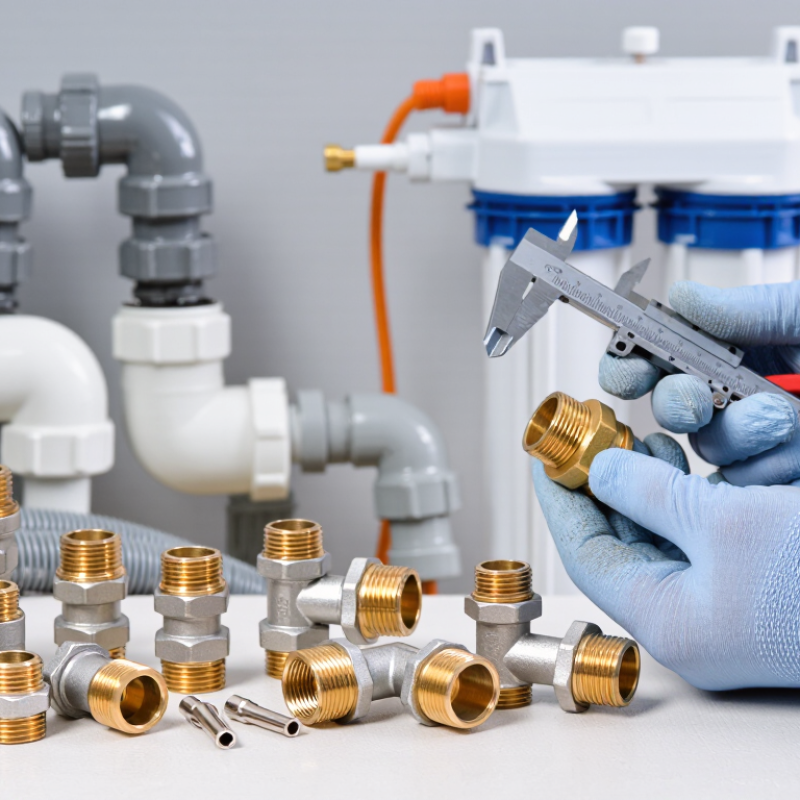
Before buying a water pipe fitting, identify what the pipe must do. An elbow changes direction; a tee creates a branch; a coupling joins two pipe ends. Reducers connect different sizes, but they can affect flow. Simple parts, different jobs.
Check the pipe material and connection style, such as threaded, soldered, press-fit, or solvent-welded. A fitting must match both. Measure the pipe’s outside diameter, and confirm whether the listed size is nominal. These numbers are not always the same. I have seen a fitting look right on the shelf, then fail to seat because one measurement was assumed.
Then consider the application. A cold-water line, a hot-water supply, and a drain line may need different materials and ratings. Confirm the fitting is rated for the working pressure and temperature, and suitable for contact with the intended water. Look for clear product specifications, not just a size label. If the pipe is hidden in a wall or carries pressurized water, check applicable plumbing requirements or ask a qualified plumber. It may feel like overchecking. But replacing a leaking joint later can mean opening finished surfaces.
Use this chart to match a fitting to its primary function: elbows change direction, tees create branches, couplings join same-size pipe ends, reducers change pipe size, unions allow a joint to be disconnected, and caps close a pipe end. A value of 1 indicates a primary function; 0 indicates it is not the fitting’s typical purpose. Before buying, confirm compatibility with your pipe material, size, pressure and temperature requirements, and applicable standards.
Water quality should guide fitting selection as much as pipe size does. For drinking-water lines, choose materials approved for potable water under the standards used in your area. Copper, stainless steel, brass, and plastic fittings each suit different systems, but none is right for every job. Check the actual product documentation, not just the material name. Small differences in alloy or manufacturing can matter.
Test water conditions when possible. Low pH, high chloride levels, and aggressive water can accelerate corrosion in some metals. Hard water may leave scale inside narrow passages. Then check operating pressure and temperature, including any short-term spikes; a fitting’s pressure rating may decrease as temperature rises. Look at seals, too. A compatible body can still leak if its gasket or thread seal is unsuitable for the water and heat. Details matter.
Where different metals meet, galvanic corrosion is worth considering. A suitable transition fitting may reduce the risk, but installation details matter too. It is tempting to choose the toughest-looking material and move on. That shortcut can be costly. A material chart cannot capture every local water condition, and I would treat uncertain test results cautiously. Confirm ratings for the complete assembly, not only one fitting. Pressure is not the only concern.
| Tip | Material or Fitting Option | Water Quality and Operating Conditions | What to Check Before Buying |
|---|---|---|---|
| 1. Confirm potable-water suitability | Fittings intended for drinking-water systems | For water used for drinking, cooking, or food preparation, material composition and wetted surfaces matter. | Check applicable local drinking-water requirements and product certification. Confirm that the fitting, seals, and any coating are approved for the intended use. |
| 2. Match the fitting to the water chemistry | Copper alloys, stainless steel, plastics, or other system-compatible materials | Acidity, alkalinity, chloride content, dissolved minerals, and disinfectants can affect corrosion, scaling, or material life. | Use representative water-analysis data where available. Confirm compatibility with the water chemistry and consult the fitting manufacturer’s technical guidance. |
| 3. Consider chlorides and corrosion risk | Corrosion-resistant alloys or suitable nonmetallic materials | Elevated chloride levels can increase corrosion risk for some metals; susceptibility depends on alloy, temperature, stress, and water conditions. | Do not select by material name alone. Check chloride limits and service conditions against applicable engineering guidance and documented compatibility data. |
| 4. Check maximum pressure | Pressure-rated threaded, soldered, pressed, welded, or plastic fittings | Static pressure, pump pressure, and transient surges can all affect the system. A fitting’s rating may vary with size and temperature. | Verify the pressure rating for the exact fitting size, joining method, and operating temperature. Include expected surge conditions in the system design. |
| 5. Check the full temperature range | Material and seal combinations rated for the service temperature | Hot-water service can reduce the allowable pressure of some plastic components and can affect seal performance. | Compare both normal and maximum temperatures with the product’s pressure-temperature limits. Do not assume a cold-water rating applies to hot water. |
| 6. Match material to the piping system | Fittings designed for the specific pipe material and joining method | Different systems use different connection methods, such as threaded, soldered, solvent-cemented, pressed, or fused joints. | Confirm pipe outside diameter, wall type, fitting standard, and compatible joining procedure. Avoid forcing mismatched components together. |
| 7. Prevent galvanic corrosion | Compatible metals or approved dielectric transition fittings | Direct contact between dissimilar metals in the presence of water may contribute to galvanic corrosion, depending on the materials and installation. | Check the sequence of metals and use a suitable transition fitting where required by the system design and local plumbing rules. |
| 8. Select seals for the fluid and temperature | Elastomer seals specified for the fitting and service | Seal compatibility can depend on temperature, disinfectants, and other water-treatment chemicals. | Confirm seal material and replacement requirements in the product documentation. Use only seals specified for the fitting and intended water service. |
| 9. Account for installation and maintenance | Accessible unions, adapters, and serviceable connection designs | Limited access, vibration, movement, or future maintenance can influence which fitting design is practical. | Allow space for tools and inspection. Follow installation instructions, support the pipe correctly, and avoid using a fitting to compensate for misaligned pipework. |
| 10. Verify standards and documentation | Fittings tested or certified to relevant regional standards | Requirements differ by location, application, pipe system, and whether the water is potable. | Check the applicable code, standard, certification, dimensional compatibility, and technical data sheet before purchase. Keep documentation for inspection and maintenance. |
Note: Material suitability and pressure-temperature limits depend on the exact product, installation, water chemistry, and local requirements. Confirm all selections against current technical documentation and applicable plumbing codes.
Before buying water pipe fittings, check the pipe’s size rather than relying on a quick visual match. Nominal size is not always the pipe’s measured outside diameter. Measure the pipe with calipers, or compare it with a reliable sizing chart. Small differences matter. A fitting that looks close may still leak or fail to seat properly.
Thread type matters just as much. NPT threads are tapered, while BSP threads may be parallel or tapered; similar-looking threads are not automatically compatible. Check the thread standard, diameter, and pitch in the product specifications. Do not force it. Cross-threading can damage both parts, and a sealant cannot fix an incompatible connection. One easy mistake is choosing a fitting by thread size alone.
Then confirm the fitting suits the whole system. Check the pipe material, water temperature, working pressure, and intended use, including drinking-water service where relevant. A metal fitting and a plastic pipe may need a compatible transition fitting. Also confirm whether the connection requires a gasket, washer, or thread sealant; different joint designs seal in different ways. If specifications are unclear, pause and verify them with a qualified plumbing professional. It may feel slower, but guessing can mean replacing parts—or finding a leak after the line is in use.
Water pipe fittings may look simple, but their quality affects leak risk, water safety, and service life. Check that the fitting’s material suits the water type, operating pressure, and temperature in your system. For drinking-water lines, look for documentation showing the product meets applicable health and safety requirements. A stamped mark can help, but it is not proof by itself. Ask for the matching certificate or test report.
Tip: Compare the certificate number, product type, and manufacturer details with the fitting and its packaging. Confirm that the certification applies to the exact material and intended use. Requirements vary by location, so check the standard accepted by your local authority or project specification. Keep the paperwork with your installation records.
Inspect the fitting closely. Look for clean threads, even surfaces, clear markings, and no cracks or burrs. Then check pressure and temperature ratings against your system, not just the pipe size. If a supplier cannot provide traceable documents, pause before buying. It is easy to focus on price and miss a small detail; even careful checks can feel tedious, but that is part of choosing reliably.
A water pipe fitting can look identical to another while differing in material, tolerances, or pressure rating. Before comparing prices, ask suppliers for product specifications and traceable quality records. Request recent delivery references for projects using similar pipe sizes and operating conditions. Ask how the supplier handles shortages, damaged goods, and urgent replacement orders. A quick reply is useful, but consistent follow-through matters more. Ask for records.
Read the warranty before treating it as a real cost benefit. Check which defects are covered, how long coverage lasts, and what proof is required for a claim. Clarify whether return shipping, inspection, or replacement labor falls to the buyer. A long warranty may still offer little protection if its exclusions are broad. Keep the terms in writing. Details matter.
Compare total cost, not just the fitting’s unit price. Include shipping, minimum order quantities, storage needs, testing documents, and the likely cost of delays. For example, a cheaper fitting that arrives late may hold up a crew and leave pipe sections unused. Check that dimensions and connection types match the existing system; an overlooked mismatch can erase a small price saving. One weak point in many comparisons is assuming every quoted item is equally suitable. That assumption deserves a second look.