What is Punch Press Dies and How Do They Work?
Punch Press Dies play a crucial role in the manufacturing sector, particularly in metal stamping and shaping. According to recent industry reports, the global die and mold market is projected to reach $102 billion by 2025, reflecting the growing demand for precision engineering and high-quality components. Punch Press Dies are essential tools in this process, enabling manufacturers to achieve intricate designs and uniformity in mass production.
The mechanics behind Punch Press Dies involve a powerful press that exerts force on sheets of metal. This action allows for cutting, bending, and shaping materials into desired forms. Research from the American Society of Mechanical Engineers highlights that the efficiency of die operations significantly impacts production costs. However, mastering the use of these dies requires expertise and technical knowledge.
While the adoption of advanced technologies has streamlined processes, some challenges remain. Many operators may struggle with wear and tear on dies, leading to increased downtime. There is also the need for constant training to keep pace with evolving techniques. This highlights the importance of ongoing education in the field, as staying updated is essential for the longevity and effectiveness of Punch Press Dies.
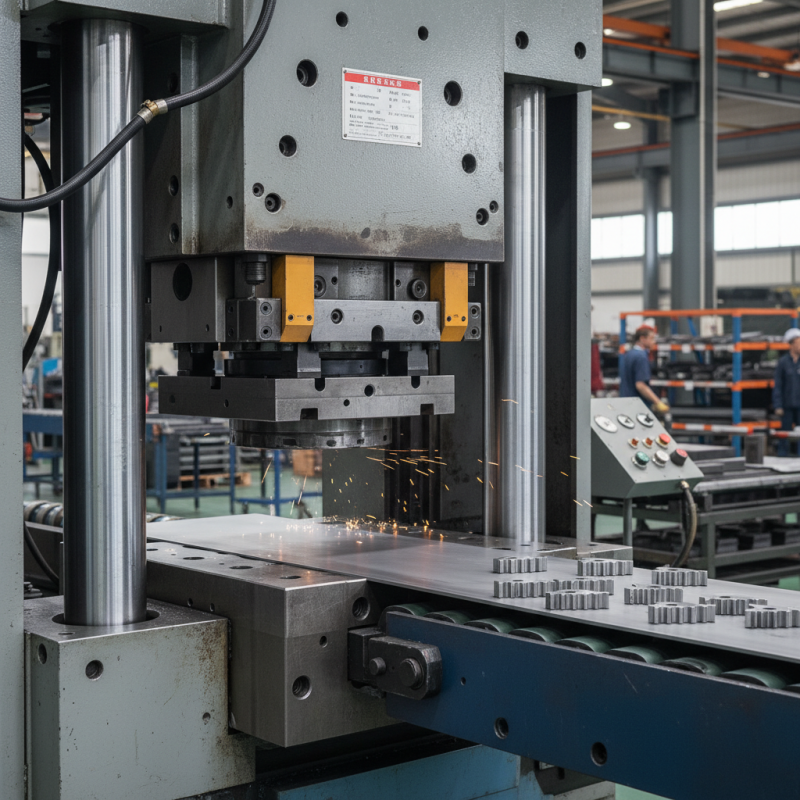
What Are Punch Press Dies? An Overview of Their Definition and Types
Punch press dies are essential tools in metal forming processes. They are used to create specific shapes and patterns in various materials. The efficiency of these dies is crucial, as they can significantly impact production costs and the quality of finished products. According to industry reports, over 25% of manufacturing costs are linked to tooling processes. Properly designed punch press dies can reduce these costs.
There are several types of punch press dies, including progressive, compound, and single operation dies. Each type serves a unique purpose. Progressive dies allow for continuous production, making them ideal for high-volume tasks. Compound dies perform multiple operations at once, enhancing efficiency. Single operation dies are best for simpler shapes. Understanding these types can lead to better selection based on project needs.
Despite their advantages, punch press dies can present challenges. They require regular maintenance to function optimally, and the wear and tear can affect output. According to a 2022 tool industry survey, 30% of manufacturers reported downtime due to die issues. This underlines the importance of investing in quality dies and regular checks to minimize production disruptions.
The Mechanics of Punch Press Dies: How They Function in Manufacturing
Punch press dies play a crucial role in modern manufacturing. These tools shape and cut materials like metal and plastic during the punching process. Understanding how they work can enhance production efficiency. The mechanics behind punch press dies involve two key components: the die and the punch. The punch exerts force, slicing through materials using precision and power. According to a study by the Association for Manufacturing Technology, about 30% of manufacturing costs can be reduced through optimized die design.
Proper maintenance of punch press dies is essential for consistent performance. Regular inspections can identify wear and tear, which may lead to costly production delays. Using high-quality materials for dies is also critical. A recent report by the International Journal of Advanced Manufacturing Technology indicates that higher-grade materials can lead to a 20% increase in die lifespan.
Tips: Always consider the design aspect of die-making. A well-thought-out design minimizes material waste. Regular training for operators can also enhance efficiency and reduce errors. Manufacturing processes are becoming complex, necessitating continuous learning in die management. Reflection on past projects can uncover areas for improvement, fostering a culture of innovation and excellence.
Punch Press Dies Usage in Manufacturing
Key Materials Used in Punch Press Dies: Ensuring Strength and Durability
Punch press dies are crucial in manufacturing, shaping materials quickly and precisely. The strength and durability of these dies depend heavily on the quality of materials used. Selecting the right materials is essential to withstand repeated stress during operations.
High-carbon steel is a common choice. It offers excellent hardness and wear resistance, making it ideal for heavy-duty applications. However, its brittleness can be a concern. Improper heat treatment might lead to flaws, resulting in potential failures during use.
Tool steel is another option. It is known for its toughness and ability to retain sharpness. This steel can endure significant impact without chipping. Nevertheless, if not properly maintained, it can corrode, which compromises its longevity. Manufacturers must choose wisely, balancing cost with performance.
Industry Applications of Punch Press Dies: Sectors That Rely on Their Use
Punch press dies play a vital role in various industries. They are essential in sectors like automotive, electronics, and manufacturing. Data from the Precision Metalforming Association shows that 40% of metal forming companies rely on dies for efficient production. This underscores their significance in shaping metal components with precision.
In the automotive industry, punch press dies create parts such as brackets and panels, which are crucial for vehicle assembly. A report from MarketsandMarkets highlights that the global automotive parts market is projected to reach $1.1 trillion by 2026. This growth relies on efficient production methods, with punch press dies being a key driver.
Additionally, the electronics sector also heavily depends on these dies. They manufacture connectors and housings, enabling the production of compact electronic devices that meet consumer demands for efficiency and performance.
Despite their effectiveness, challenges exist in the design and maintenance of punch press dies. Engineers often encounter issues with tooling wear and inaccuracies. Continuous improvement is necessary to enhance die performance. Companies are now focusing on advanced materials and techniques to mitigate these problems, but some results still fall short of expectations. This ongoing struggle emphasizes the need for constant innovation and adaptation in die technology.
Maintenance and Quality Assurance for Punch Press Dies in Production Lines
Maintaining punch press dies is crucial for production efficiency. Regular inspections can catch wear and tear early. Technicians should routinely check alignment and clearance. Even the tiniest defects can lead to larger issues during production. The goal is to minimize downtime while ensuring the quality of the stamped parts.
Quality assurance is equally important. Each die should be calibrated according to the specifications of the production process. Accurate measurements play a significant role in the overall quality. It is essential to document each inspection and maintenance activity thoroughly. This documentation can help identify patterns or persistent problems, allowing for proactive adjustments.
Training staff on maintenance procedures is vital. Skilled operators can spot potential failures before they disrupt production. They might notice unusual sounds or vibrations during operation. This attention to detail can reduce costly errors. Emphasizing the importance of die care can lead to better outcomes in the long run. Continuous improvement should always be the focus.