How to Choose a Display Flag in 2026?

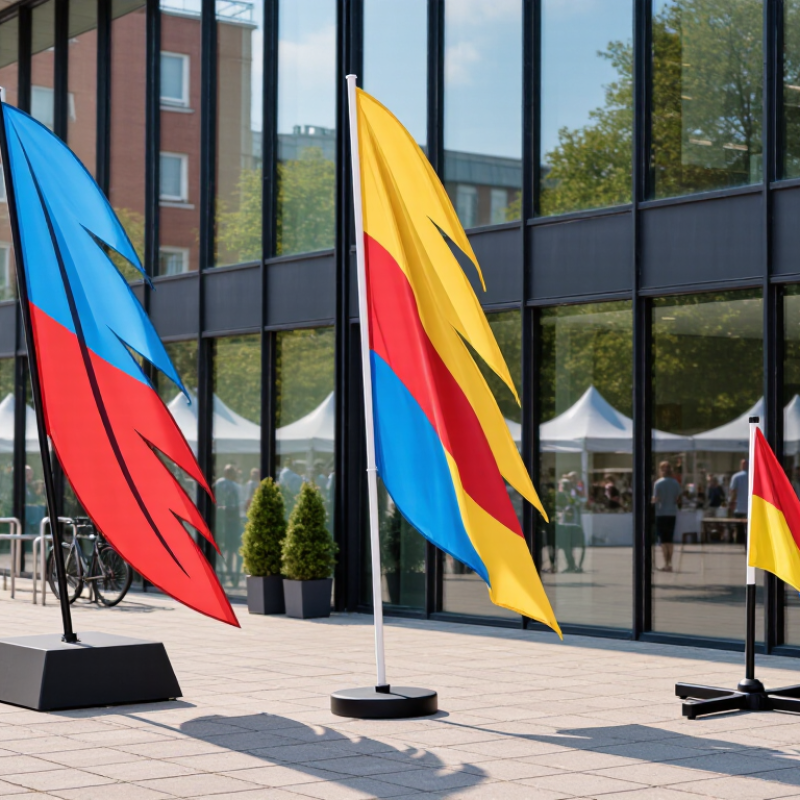
Choosing a Display Flag in 2026 is less about picking the brightest fabric and more about matching the flag to its job. Will it stand outside a storefront, guide visitors across a trade-show floor, or sit beside a busy entrance? Each setting changes the right size, shape, base, and print. A blade flag can read clearly from a distance, while a feather style may move more visibly in a light breeze. Small choices matter.

A transparent note about the quotation: Jordan Lee is a fictional composite adviser, not a cited industry source. His illustrative rule is: “Choose for the site first; let the design follow.” It captures a practical starting point, not a universal standard. Measure the space, check the surface beneath the base, and consider how often the flag will be moved. A sleek design is no help if its base wobbles on paving or blocks a narrow walkway.

This guide will compare materials, print methods, bases, portability, and care, so buyers can weigh trade-offs before ordering. Fabric weight affects handling. Hardware affects setup time. Weather exposure affects how often a flag may need inspection or replacement. No option wins everywhere. Even a well-planned choice can disappoint when conditions change, so leave room to reassess after real use. A little testing helps.
How to Choose a Display Flag in 2026?

Identify the Purpose and Setting for Your Display Flag

A display flag works best when its job is clear. Is it meant to guide visitors, mark an entrance, share event information, or add color to a space? Choose the message before choosing the shape or size. A tall feather flag can catch attention near a walkway, while a compact tabletop flag may suit a reception desk. Keep the wording brief; people often see a flag while moving, not while standing still.

Next, study the setting. Measure the available space and check what surrounds it. A flag placed beside a busy road needs strong contrast and large lettering. In a quiet indoor lobby, softer colors and finer details may remain visible. Outdoors, consider wind exposure, ground type, and nearby obstacles such as trees or doorways. Match the base to the surface, too: a flat floor, soft lawn, and hard pavement each call for different support. Small details matter. I might still underestimate how much wind a corner can catch, so observe the site at different times before ordering.

Tips: Take a photo from the viewer’s likely approach. Check whether the message reads clearly at a glance. For outdoor use, confirm the flag and base are rated for the expected conditions, and plan to bring them in during severe weather.

Choose the Flag Type, Fabric, and Finish

How to Choose a Display Flag in 2026?

Choose the Flag Type, Fabric, and Finish

Start with the location, not the design. A tall feather flag suits roadside visibility, while a rectangular flag can make a storefront message easier to read. Teardrop shapes hold their outline well, but offer less usable space for long wording. Measure the display area and check the pole system before ordering. Small details matter.

Fabric choice affects weight, movement, and print appearance. The Textile Exchange’s 2023 Materials Market Report estimates that polyester made up 54% of global fiber production in 2022. That scale does not make every polyester fabric equally suitable. Lightweight knitted polyester moves freely in a breeze; woven fabric can feel more substantial. Ask how the print will look from the reverse side, especially for a flag viewed from both directions. I would not call one fabric best for every site.

Finish the flag for its actual workload. Reinforced stitching and secure pole pockets help with repeated setup, while an outdoor display may need fabric tested for light fading. Check colorfastness details and care instructions rather than relying on broad “weather-resistant” claims. A neat hem helps. So does a legible design. I still think wind exposure is easy to underestimate; a sheltered courtyard and an open roadside are not the same job.

Select the Right Size, Mounting Method, and Placement

Start with the viewing distance and the space around the flag. A compact indoor display may need a smaller flag than an outdoor setup viewed from across a parking area. Check the flag’s full height, including its pole or hardware, against ceilings, doorways, and nearby signs. Measure twice. A quick paper outline can reveal when a planned size feels too dominant or gets lost in the background.

Choose a mounting method that suits the surface and expected conditions. A ground stake works for soft soil, while a weighted base can help on level floors. For wall or pole mounting, check that the fittings match the structure and allow the flag to move freely. Place it where people can see it without blocking walkways, windows, or sightlines. Wind, foot traffic, and nearby obstacles matter. My first placement estimate is often off, so test the position from several viewing angles before fixing the mount.

Tips: Mark the flag’s outline with tape, then view it from the entrance and main approach. Check clearance on a breezy day, too. Reconsider if the fabric twists or the message disappears behind an obstacle.

How to Choose a Display Flag in 2026? — Select the Right Size, Mounting Method, and Placement

Display Situation Typical Flag Size Suitable Mounting Method Recommended Placement Selection Checks
Small indoor display or compact tabletop presentation About 2 × 3 ft (61 × 91 cm) Table stand or small indoor pole base Reception desks, counters, meeting rooms, and display tables Check the stand’s pole opening and base footprint. Keep the flag clear of screens, lighting, and walkways.
Standard indoor display About 3 × 5 ft (91 × 152 cm) Floor-standing indoor base or wall-mounted pole bracket Entry areas, hallways, lobbies, and presentation spaces Allow enough vertical and side clearance. For a wall bracket, confirm the wall and fixings can support the assembled display.
Outdoor display in a sheltered area About 3 × 5 ft (91 × 152 cm) or 4 × 6 ft (122 × 183 cm) Ground spike in suitable soil, or a weighted base on a firm surface Garden edges, event grounds, and areas protected from strong gusts Choose a mount designed for the surface. Keep clear of overhead lines, roads, entrances, and pedestrian routes; take the display down in unsuitable weather.
Large outdoor display with ample open space About 4 × 6 ft (122 × 183 cm) or 5 × 8 ft (152 × 244 cm) Compatible pole and a properly secured ground or surface mount Open grounds or broad frontage, set back from buildings and circulation areas Confirm that the pole, sleeve, and mount are compatible with the flag dimensions. Larger flags catch more wind, so follow the mount and pole instructions and assess local conditions.
Fixed display on a building or fence Often about 2 × 3 ft (61 × 91 cm) or 3 × 5 ft (91 × 152 cm) Wall or post bracket matched to the pole diameter and mounting surface Visible, unobstructed locations that do not block doors, windows, signs, or accessible routes Use suitable fasteners for the surface, check for pipes or wiring before drilling, and make sure the flag can move without striking nearby objects.

Note: Sizes shown are common examples, not a universal standard. Before purchasing, verify the flag’s actual dimensions, sleeve or attachment style, pole compatibility, mount requirements, and any applicable site rules.

Compare Print Quality, Durability, and Care Requirements

How to Choose a Display Flag in 2026?
Compare Print Quality, Durability, and Care Requirements

A display flag earns attention only when its print stays clear at viewing distance. Check fine lettering, curved edges, and solid colors in daylight, not just on a bright screen. Small details matter. On a fabric sample, inspect whether borders look sharp and colors appear even. Pale material can make dark ink seem less dense, so compare finished samples when possible.

Durability depends on more than fabric weight. Check the stitching around the edges and attachment points, where repeated movement can cause wear. Wind is unforgiving. A heavier fabric may feel substantial, but it can also place more strain on its supports. Consider where the flag will be displayed, how often it will be used, and whether it needs to pack away easily.

Tips: Ask for the care instructions before ordering. Confirm whether the flag can be washed, and follow its label rather than guessing. After use, let it dry fully before storage to reduce damp odors and creases. Inspect seams now and then; small repairs may help, though they cannot undo every kind of damage. The best choice is not always the one with the boldest print. It is the one whose appearance, construction, and upkeep fit your actual use.

How to Choose a Display Flag in 2026

Compare print quality, durability, and care requirements across common flag fabrics.

Indicative ratings on a 1–5 scale; higher ease-of-care scores mean simpler care. Actual performance depends on fabric weight, printing method, construction, and manufacturer care instructions.

Set a Budget and Verify the Supplier’s Specifications

How to Choose a Display Flag in 2026?
Set a Budget and Verify the Supplier’s Specifications

Set a realistic budget before comparing display flags. Include the printed flag, pole, base, shipping, and any replacement parts. A low quoted price may not cover the hardware you need. Ask for an itemized estimate. Small details matter.

Check the supplier’s specifications in writing. Confirm the flag’s finished dimensions, fabric type, printing method, and included accessories. Ask whether the pole and base suit your intended setting, such as a shop entrance or indoor event. If the flag will be used outdoors, request clear guidance on suitable weather conditions and care. Do not assume that “outdoor-ready” means it can handle every wind or rain condition.

Look for practical evidence, not just polished product photos. Request a drawing or sample image showing the shape and print area, and confirm how artwork is checked before production. Review the stated lead time, warranty terms, and process for resolving defects. I have seen buyers focus on the flag alone, then discover the base is sold separately. It is an easy mistake. A small sample or written confirmation can reduce surprises, though neither guarantees a perfect final result. Ask specific questions, save the answers, and compare total costs before placing an order.

Article Source: